 |
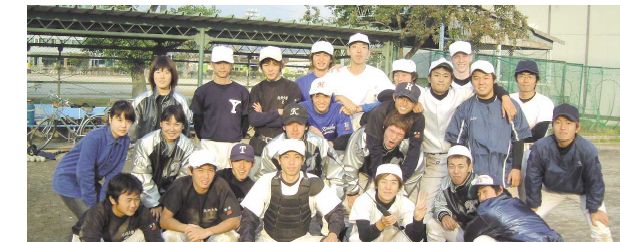
| 準硬式野球部のチームメイトと。後列右から2人目がSteven君。 |
One of the principle motivations for studying abroad is the desire to understand the perspective of another country. With this in mind, let me assert that attending a club is absolutely crucial to truly comprehending the depth and intensity that friendship can reach in Japan. I joined a baseball team that practiced three times a week in Hakozaki with games on the weekends against other teams from around Northern Kyushu. In addition to having a good time doing something I really enjoyed, participating in a club experience helped me to make some really good friends.
|
| 準硬式野球部のチームメイトと。後列右から2人目がSteven君。 |
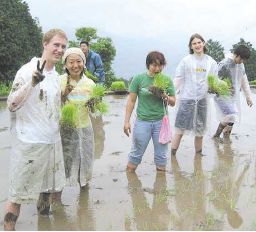
JTWのフィールドワークとして行われている、
佐賀県有田町の棚田での田植え。At first, I was very afraid to participate in the club because I had heard that they were so strict. The organizational relationship is something that very few foreigners experience in Japan, but it is one of the most worthwhile and enjoyable. While, the complexity of relationships present in every Japanese organization is difficult to see, experiencing it is amazing. At first, since I didn't speak a word of Japanese when I joined, I thought the club was just like one in America. Only over time did I realize that Japanese club members care far more about their friends than one's in America. As I took part in the games and the duties of the team I slowly became a part of the group. I guess I have ground maintenance, searching for balls, and the strict practice schedule to thank for the cultural exchange I experienced.
When I first entered the club I was surprised by the rigidity of the kohai/sempai relationship. In America sports teams are structured on a strict hierarchy of skill. The only thing that matters is how well a member plays in games. However, in Japan respect centers on how old a player is and how long he has been with the team. While this might seem to conflict with winning it fosters a kind of relationship that might be entirely unique to Japan. Over the course of my time on the team, I came to respect my sempai for the concern they showed for the development of my baseball skills as well as their concern for my well-being. The captain of my team Shakutsui and the sub-captain Sasaki always took time to give me advice and help me out. Eventually, using respect language with them was something I wanted to do to show how much I appreciated their help.
After four months of club life, I suffered an injury to my arm that prevented me from continuing with the club activities. Yet even when I was in the hospital, my club members came to bring me gifts, check on me, and to show me the progress of the team. I felt so happy when Ushijima, Watanabe, and the others brought me food and when Kuroda wanted to come to Yagi Byouin so badly that he broke his thumb too. In the end, the basis of cultural exchange is meeting people that will care about you even when you have little to offer them in return. I felt that my club in Japan was full of excellent people and I wish that all people could experience club life.
交換留学
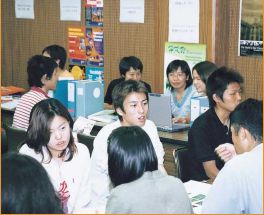
オープンキャンパス説明会“30分でわかる!「超図解」九大から留学するしくみ” |