


































Harnessing the Power of Spin: Pioneering Innovation through Cutting-Edge Physics
Discover the Research: Article 10—Naoto Yamashita, Faculty of Information Science and Electrical Engineering
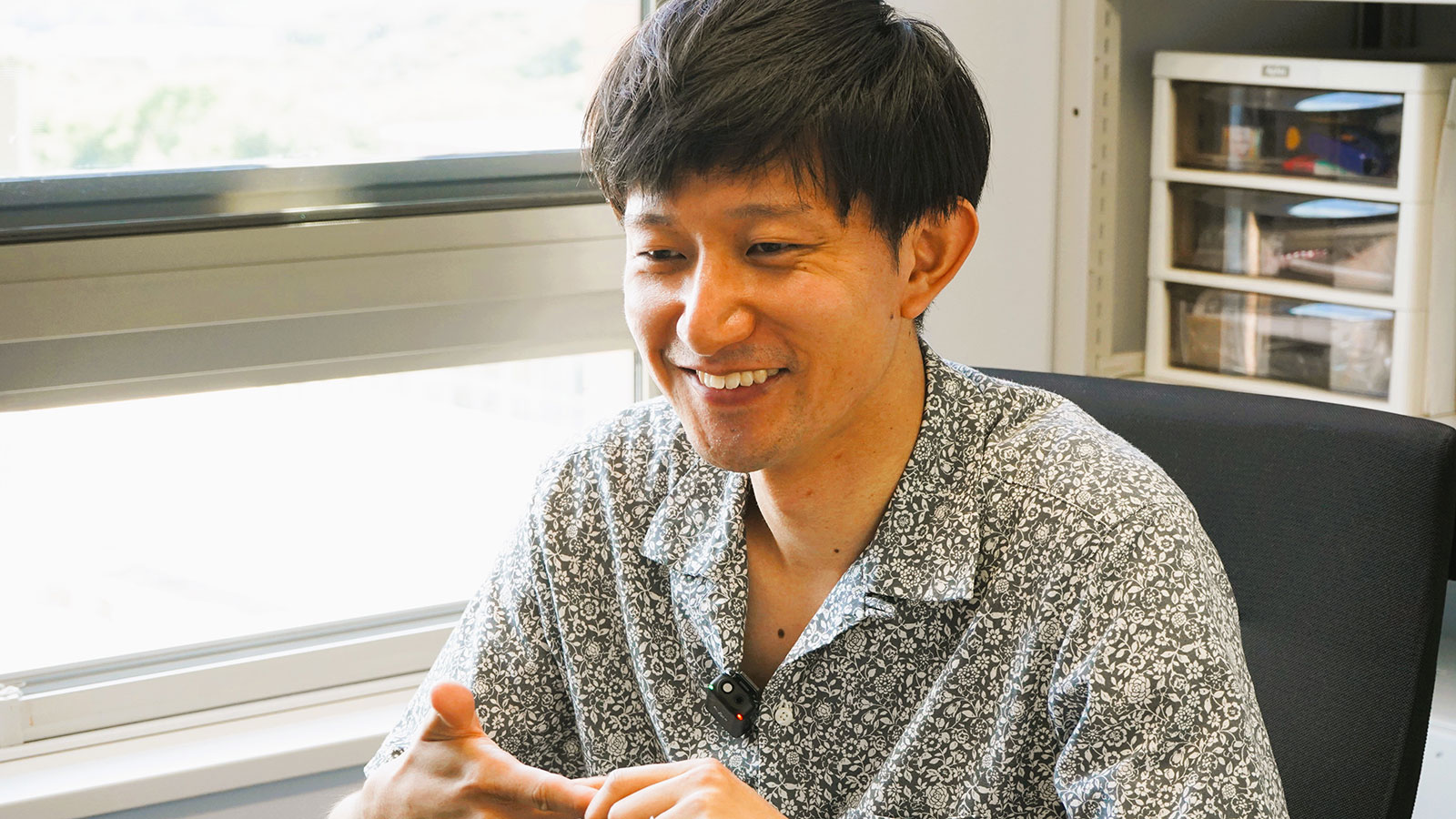
From smartphones to supercomputers, almost all our daily electronics run on the flow of "electron charge." But did you know? Electrons have another interesting property called "spin." In this feature, we sit down with Associate Professor Yamashita, a young researcher exploring this mysterious "electron spin" to create next-generation, ultra-high-performance devices. Join us as we dive into the world of Spintronics—the future of technology—and hear his inspiring message for the students who will lead the way!
Beyond Charge: Crafting the Future of Electronics with Electron Spin
Could you tell us about your research?
I conduct research in semiconductor spintronics, a field aiming to create next-generation devices by harnessing "spin"—the magnetic property of electrons. Traditionally, electronic devices have relied solely on the electron charge. For decades, "scaling laws"—improving performance through miniaturization—have fueled our technological evolution, from the birth of the internet to today’s generative AI. However, in recent years, the scaling laws alone have reached their limits. With the explosive energy demands of AI-driven data centers, we can no longer rely on traditional methods. By tapping into "spin"—an inherent degree of freedom in electrons—we aim to break through these barriers and drive the innovation.
What exactly is electron spin?
Spin is an intrinsic form of angular momentum, which governs a material’s magnetism. Magnets are used in electronic devices because they can store information even without power. Actually, magnetic materials have been utilized to store information. However, if we can gain a deeper understanding of the dynamics of spin angular momentum and learn how to fully harness it, we may be able to compute more quickly and store much larger amounts of data. This could lead to the creation of brand-new, high-performance devices.
Spintronics: already powering the information society
So, this field has the potential to bring about significant change to society?
Absolutely. In fact, spintronics has already revolutionized our lives. A perfect example is the hard disk drive (HDD)—a cornerstone of modern technology that relies on the "giant magnetoresistance (GMR) effect," discovered about 40 years ago. It might sound like old news, but think about this: without that discovery, we might still be stuck using magnetic tapes—like old VHS or cassette tapes—just to store our data. The birth of the HDD didn't just store files; it exponentially expanded the amount of information humanity could handle, reshaping society forever. While the internet and the digital age connected the world, it was the HDD that quietly powered this transformation from behind the scenes. It truly changed the world!
So, in your opinion, spintronics could revolutionize computer performance?
Definitely, computers exchange massive amounts of data between storage, memory, and their central processing unit (CPU). While CPUs are performing faster and storage and memory capacities have increased, the communication speed between these components—along with the energy required for write operations—has become a major hurdle, known as the von Neumann bottleneck. My goal is to use spintronics to shatter this bottleneck, accelerate processing speed across devices, and also make the devices themselves more compact.
By the way, SSDs seem to have become more mainstream than HDDs in recent years. Would you agree?
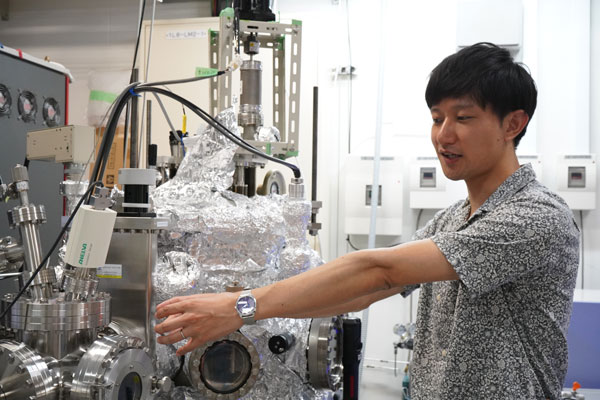
That’s an insightful point. Solid-state drives (SSDs) represent the pinnacle of semiconductor engineering, using electron charge to encode data and storing high-density data in three-dimensional structures. SSDs store information by accumulating electric charge in transistor gates. However, SSDs have a weakness as well. Repeated writing causes material degradation, leading to charge leakage and limiting the total number of write cycles. This is a critical issue for modern systems like continual-learning AI—which constantly refines itself—as these technologies require incessant, high-speed data rewriting. This is where magnetic memory shines. I believe it is well-suited for developing “infinitely rewritable” memory, which is essential for advancing AI technology. Recently, magnetoresistive random-access memory (MRAM), which utilizes magnetic properties, has emerged as a promising new type of memory. By leveraging electron spin, MRAM operates at high speed, consumes little power, and offers near-infinite write endurance. While still in its early stages of adoption, the evolution of MRAM is something we should all be very excited about.
What might the future look like if AI constantly learned and refined its own behavior?
How might our world change if these kinds of new high-performance devices were developed?
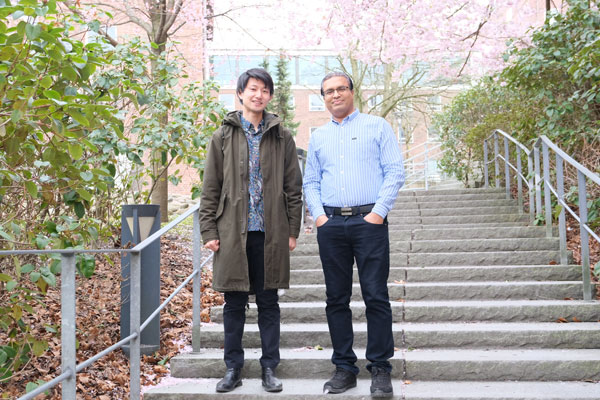
For example, AI might approach human-like intelligence if it gains the ability to reflect on its own behavior, identify mistakes, and correct them independently. Admittedly, this is partly my own speculation (laughs). But some experts believe AI could surpass all human intelligence within the next five years. That raises a critical question: How can we ensure that super-intelligent AI stays aligned with human values? AI can make errors or even provide false information. Now imagine a world where AI is more intelligent than humans and free to act on its own. That could bring about challenges we can’t even foresee yet.
How can we align AI with human values?
Designing AI that reflects human values should involve a thought process similar to our own—one that learns from the past to build a better future. That’s what we call a continuously learning AI. To make these systems a reality, breakthroughs in hardware are essential. SSDs, for example, degrade over time, which makes it challenging to maintain continuous AI learning. This is where spintronics comes in. High-performance MRAM, with its unlimited rewrite cycles, enables AI to keep learning indefinitely. In short, spintronics may be the essential technology for creating AI that truly coexists with humanity by harmonizing with human values.
Backcasting shows how small wins can lead to big change
Could you share what is most important when conducting your research?
Three things are always on my mind. First, I strive to create something truly useful. This is a concept I’ve cherished since my student days. On my own, I can only make materials or small devices. Yet, I believe that even small achievements can provide a massive impact on society, especially when we use backcasting to envision the performance the future really needs.
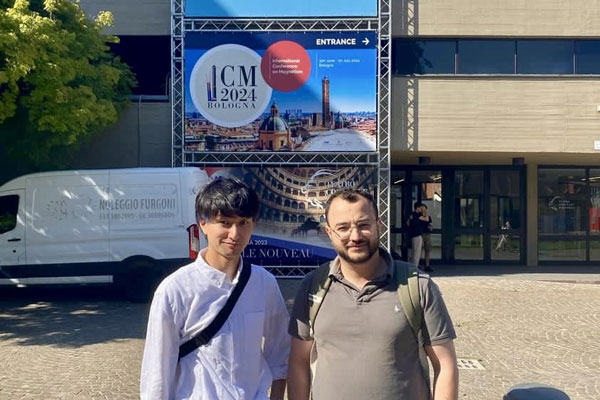
Second, I never stop diving deeper into fundamental science. Whether an experiment succeeds or fails unexpectedly, I always ask "Why?" to refine my understanding of physics and chemistry. To do this, it’s vital to look beyond our own field and explore the broader scientific landscape.
Third, I believe research is only complete when it is shared with the world. Whether through a paper or a conference, sharing our results is essential. To be honest, I’ve never been much of a talker (laughs), but my international experiences have changed me. Since joining Kyushu University, living abroad and meeting people from diverse backgrounds through science have become my treasures. Writing a paper isn't a chore—it’s a meaningful invitation to join the global academic community. When I share this with my students, I truly hope they discover the same joy in research.
Encouraging students to focus on what can be done only now as a student
Is there a research project that stands out as especially memorable for you?
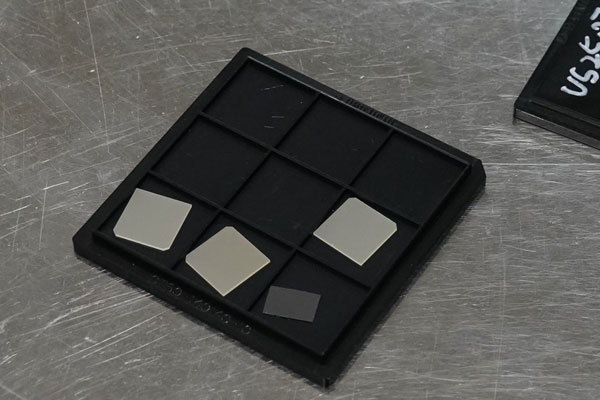
One memorable project since joining Kyushu University is a new experiment on the deposition of magnetic films with perpendicular magnetic anisotropy. When I began these experiments with my students, we spent about six months facing repeated failures. The film either wouldn’t form properly, didn’t crystallize, or didn’t even become magnetic. After endless trial and error, we finally saw clear evidence of perpendicular magnetization. That moment was deeply rewarding —a moment I’ll never forget.
What do you keep in mind when mentoring or working with your students?
In my lab, I help students build three essential pillars for their future. First is deep expertise in their chosen field. Second is strong communication skills, including English conversation. Third is logical thinking and effective planning. These abilities are widely expected of Kyushu University graduates and are in high demand across society. I believe they are not only vital for conducting research but also for helping students achieve their personal goals and dreams.
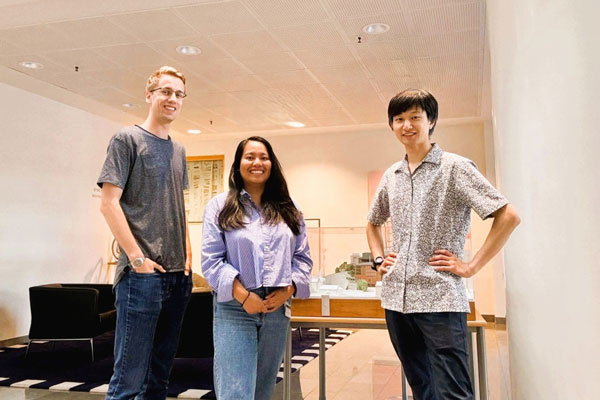
In our laboratory, I encourage my students to deepen their understanding of quantum mechanics and solid-state physics. But I also believe that research is complete only when the results are published, either through papers or by presenting at an academic conference. By presenting their work, students develop essential communication skills, including the ability to report, consult, and collaborate effectively. However, I also remind them: Research is not everything in life. I want it to be a pursuit that enriches their lives. That’s why I help students master the cycle of efficiently advancing their research, producing results, and sharing them with the world.
It may sound like a cliché, but I believe that growth comes from stretching yourself beyond what you already know. I believe that challenges can be overcome only by those who face them head-on. At Kyushu University, I want my students to engage in fundamental research that leads to major innovations.
Creating practical innovations from new spintronics physics

Could you share your future vision or goals?
My goal is to rapidly grasp newly discovered physical phenomena and transform them into innovations that truly benefit society. Spintronics is an exciting and fast-moving field, with groundbreaking discoveries emerging almost every year. I aspire to be a researcher who harnesses these breakthroughs to create exciting new functions from scratch—pushing the boundaries of technology far beyond what anyone has ever imagined.
Visit Yamashita’s lab for more information about his research.