





























Giving voice to silent artifacts for future generations: The Yayoi Period and World War II
Discover the Research Article 11―Yoshinori Tajiri Faculty of Social and Cultural Studies
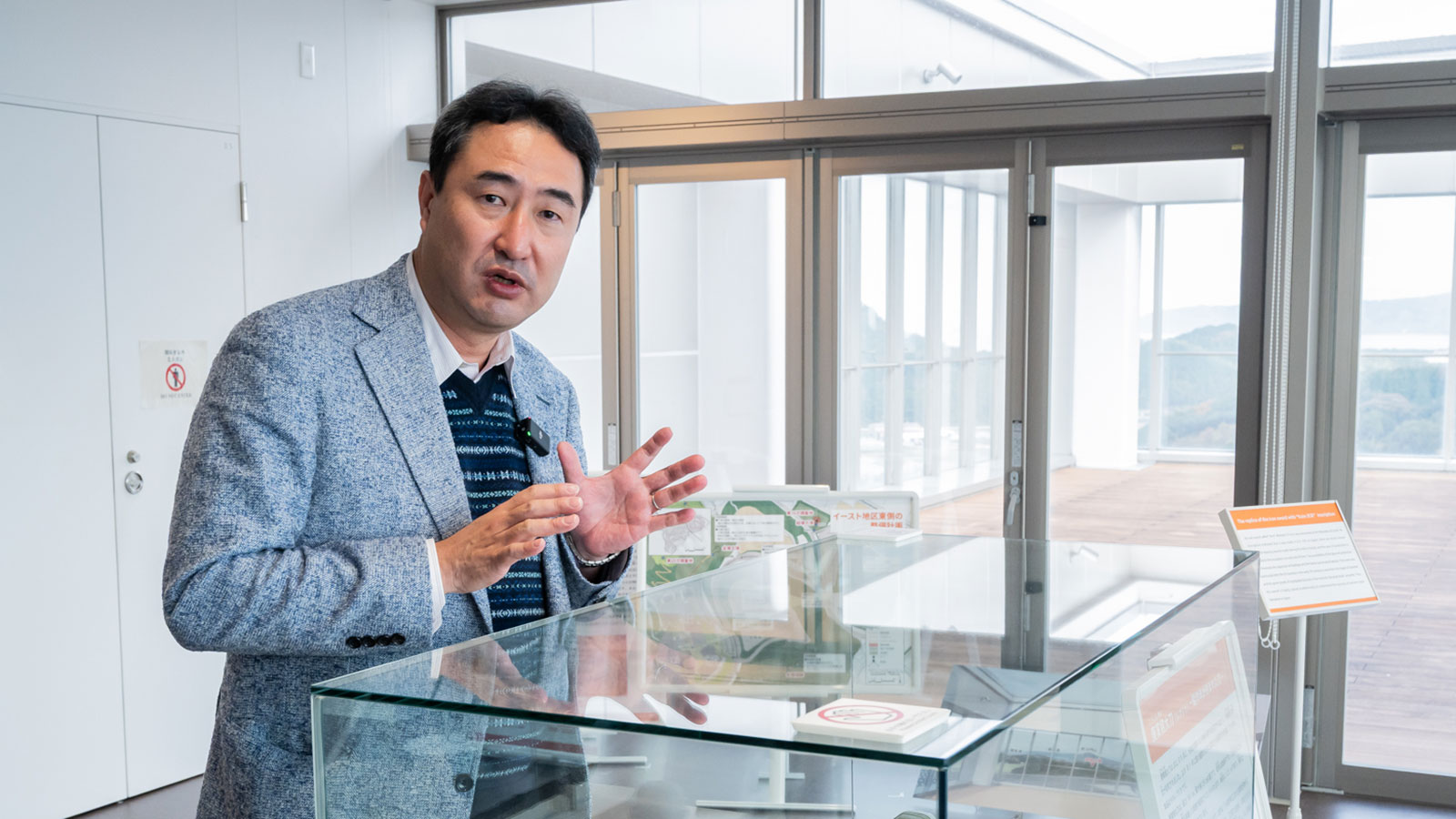
Fukuoka has long served as the gateway to Japan, a place where new technologies from across Eurasia arrived and major historical shifts unfolded. A researcher conducts archaeological surveys in two distinct time periods: ancient bronze production dating to approximately 2,000 years ago and World War II-era sites. Yoshinori Tajiri, Professor in the Faculty of Social and Cultural Studies, brings together digital tools and interdisciplinary insights to examine what relics can reveal about long-term historical change. We spoke with Tajiri about what makes the archaeology insightful and what he hopes to pass on to the next generation through fieldwork.
Uncovering the societal meaning of the Yayoi period’s sophisticated craft techniques
Could you tell us about your research?
My field of expertise is archaeology, with a focus on two major themes. The first is the bronze production system of the Yayoi period. Fukuoka, on the island of Kyushu, was the primary hub for metal artifacts introduced to the Japanese archipelago from the Korean Peninsula. These bronze objects were made using complex production methods for their time―innovations never seen in Japan.
Over time, metalworking techniques developed and spread from Fukuoka to other regions. Bronze artifacts, in this context, were not only functional tools but also factors in societal change. I have been striving to reveal what technologies enabled bronze production and how people of the time used these objects.
I’ve heard that the Ito Campus has many archaeological sites. Is that true?
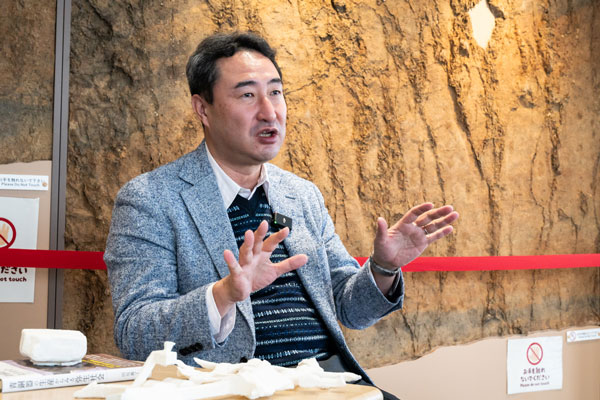
Yes. Many archaeological sites are located beneath the Ito Campus. For example, a keyhole‑shaped burial mound, a Kofun, once stood here at what we now call the Ishigahara Kofun Site Observation Gallery. It presented significant preservation challenges during campus development, and the Kofun was ultimately not retained. Instead of reconstructing the mound, the gallery was built at an elevation and location closely matching those of the original mound. This allows visitors to view the surrounding scenery as if they were standing atop the original Kofun.
*Access to a video of the Kofun excavation conducted on the Ito Campus of Kyushu University
What other research themes are you working on?
I have been engaged in battlefield archaeology. In Japan, 2025 marks 80 years since the end of World War II—a turning point that reshaped society and continues to influence how we live today.
80 years have passed, and the number of people who lived through the war has grown small. In the past, we could sit with them and listen. Some understandably chose not to revisit painful memories, but the witnesses to history were still there. Today, their numbers continue to decline. In this situation, we should again ask what that war meant—and what it still means for us now. When the witnesses are gone, who can tell the facts? For us, the artifacts excavated from wartime sites are what remain to speak to us.
As part of your research on war sites, do you examine military facilities as well?
Yes. At the end of the war, the former Japanese Army burned and abandoned most documents, leaving few official records today. As a result, one of the most effective ways to understand what happened at these sites is to excavate and study the military facilities through archaeology. By examining the artifacts and the conditions of the structures we reveal, we can reconstruct what people did at the site. We are currently working on war‑related archaeological sites in collaboration with several municipalities, including Shimonoseki City in Yamaguchi Prefecture and Akkeshi Town in Hokkaido.
Even after 80 years, aren’t the facilities―now left without maintenance―still dangerous?
That’s true. Even after 80 years, wartime archaeological sites—especially underground bunkers—have deteriorated to the point where entering them without proper protection poses a risk of collapse. This is why we use 3D scanning in our research. The scanning process is quick and allows us to collect detailed data while ensuring safety during excavation. Back in the laboratory, we analyze the data from multiple perspectives by taking measurements and creating cross‑sectional drawings to visualize the structures on a computer screen. Digitizing the data also allows us to produce physical models with a 3D printer. Using these techniques, we aim to document wartime archaeological sites that are gradually disappearing and preserve this factual record for future generations.
Responsibility borne by the researcher who conducted the excavation and firsthand wartime memories in a bunker
Could you share any memorable stories from your research so far?

I remember two major episodes, both of which shaped my research. The first involves my work on bronze artifacts from the Yayoi period. As a student, I was allowed to participate in various excavations. One of them was the excavation at the Iikura D Site in Sawara-ward in Fukuoka City. It was a settlement site in the Yayoi period. “You’ll be responsible for this dwelling structure,” my supervisor said. Digging through the mud, I uncovered a mysterious object. “What’s this?” Upon close examination, artificial grooves were carved into it. The artifacts I excavated were not ordinary casting molds but rather ones used to create a mirror. When I found it, only three casting molds for creating a mirror had been identified across Japan. It marked a historic discovery―the first casting mold found in Fukuoka and the fourth case nationwide.
That really is a significant discovery— the first case in Fukuoka and only the fourth nationwide.
That’s right. The first find of its kind in the city attracted considerable media attention. At the time, my supervisor told me, “You need to take ownership.” His words made me realize that I really had to step up — and that moment set my resolve, in the best way.
Could you share another memorable story from your research?
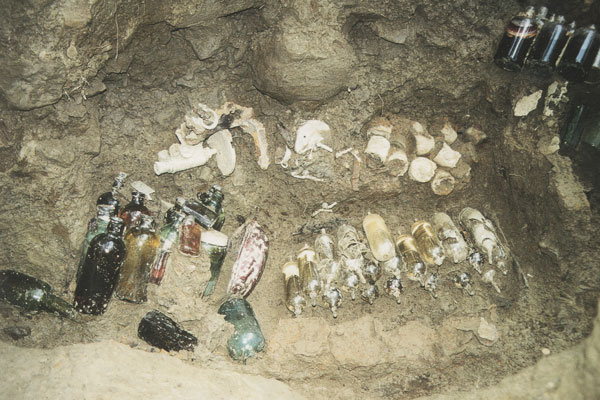
Source: Haebaru Army Hospital Caves, Vol. I, Haebaru Town Board of Education, 2000
Another topic relates to wartime archaeological sites. I spent my undergraduate years in Okinawa and had the opportunity to investigate the Haebaru Caves of the Okinawa Army Hospital, where the Himeyuri Student Corps once worked. Many medical supplies and instruments were excavated there. The Himeyuri Student Corps consisted of schoolgirls mobilized as nursing assistants. They worked in a place that was “a hospital in name only” — in reality, hand‑dug caves and makeshift shelters under dark, cramped conditions. What we could learn from the artifacts was limited. At the time, some survivors of the Himeyuri Student Corps were still alive, and I interviewed them face‑to‑face in the cave shelters.
It was an intense experience—a moment when the reality of war came sharply into view. That was the moment when I felt a strong conviction—that, as someone pursuing archaeology, I needed to continue recording these facts. Once the survivors are gone, only the remaining artifacts—and the archaeologists who interpret them—can tell what happened at the site.
Identify research questions through on-site observation
What do you keep in mind when teaching your students?
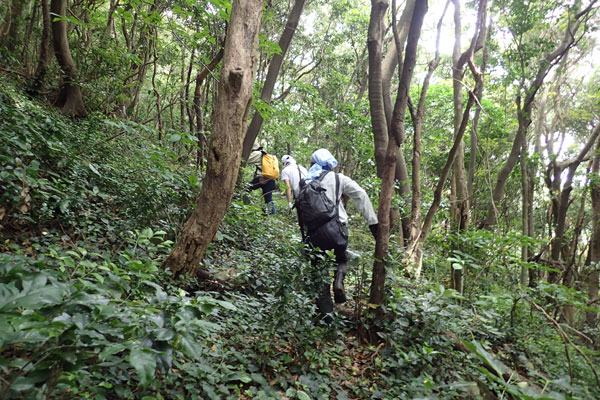
I advise students to make on-site experiences their top priority. My experiences led me to several unexpected discoveries and encounters. Of course, classroom lectures are important, but they are only the first step. I tell students to get outside as much as possible. When I have fieldwork opportunities, I take students with me and encourage them to visit excavation sites where other universities are conducting research. The essence of learning comes from what you cannot get from a textbook—the atmosphere of a site, the texture of the soil, and conversations with local people. How attentive you are in the field, and the questions you identify there, shape who you are as a researcher and as a member of society.
What kind of people do you hope your students will become in the future?
Kyushu University students are highly capable, and I believe they have the potential to become leaders in society. For this reason, I want them to look beyond armchair theories and seek to understand what is happening on the ground. Whatever paths they take—whether in archaeology, the private sector, or public service—I hope they will always stay connected to realities in the field.
Collaborate with local communities to create hubs for knowledge creation
What is your outlook for your future research?
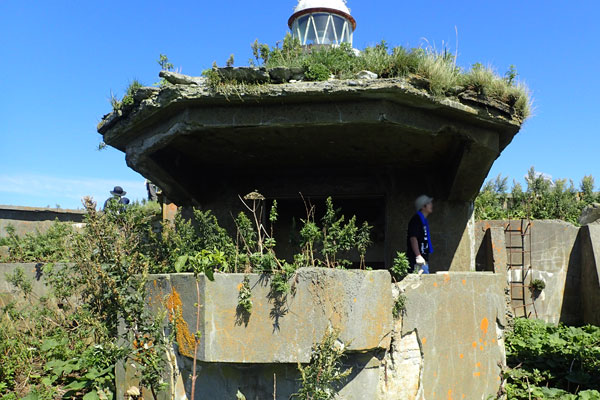
Firstly, I hope to continue my long-standing interest in studying Yayoi-period archaeological sites in Kyushu. This year, we excavated a new artifact, and I now find myself wondering, “What is this?” Items we never imagined turn up almost every year. Kyushu truly is a field where discoveries never cease.
Secondly, I aim to deepen my ongoing project at Hokkaido regarding wartime archaeological sites. In Japan, when people think about the battlefields of World War II, they tend to picture the southern places such as Okinawa or Kagoshima. For many people in Hokkaido, too, war still feels like something that happened far away. However, many military facilities were established in Hokkaido. In recent years, people have gradually lost interest in their local history. I hope that by conducting investigations there, teams like ours from outside Hokkaido can spark greater awareness of the historical significance of local communities.
Are you also working on a collaboration project with Ukiha City?
Yes. Ukiha City and the School of Interdisciplinary Science and Innovation at Kyushu University, where I work, concluded a partnership agreement. Although the city is very appealing, many young people leave for tertiary education. This led me to consider the idea of establishing a second campus for the School of Interdisciplinary Science and Innovation in Ukiha City.
Many vacant houses in the city could be renovated and repurposed as classrooms or dormitories where students could stay, talk with local people, learn from them, and work together to address the issues in this area. I want to establish a hub, like a satellite campus. I am even thinking that we could hold the School of Interdisciplinary Science and Innovation’s entrance ceremony there. We are working on several initiatives designed to help the University and the community grow together.
Investigating the Kofun on Kyushu University’s Ito Campus: toward the development of a nature trail leading to the ancient burial mound.
Visit Tariji’s Researcher Profile for more information about his research.