

































Managing water with local wisdom and science
Kyushu University leads National Geographic-supported freshwater conservation initiative in Asakura
In Asakura, the river follows the past. Long before modern science, villagers reshaped the land. Researchers are now learning how those systems still work, collaborating with local communities to manage rivers and prevent disasters while preserving biodiversity.
Across a narrow watershed in Asakura, a rural city in Fukuoka Prefecture, centuries-old stone channels still guide water through fields and into the river below. Today, those same systems are the focus of researchers at Kyushu University's Watershed Systems Engineering Laboratory. One of their projects aims to restore abandoned rice fields to functioning wetlands and forest habitats.
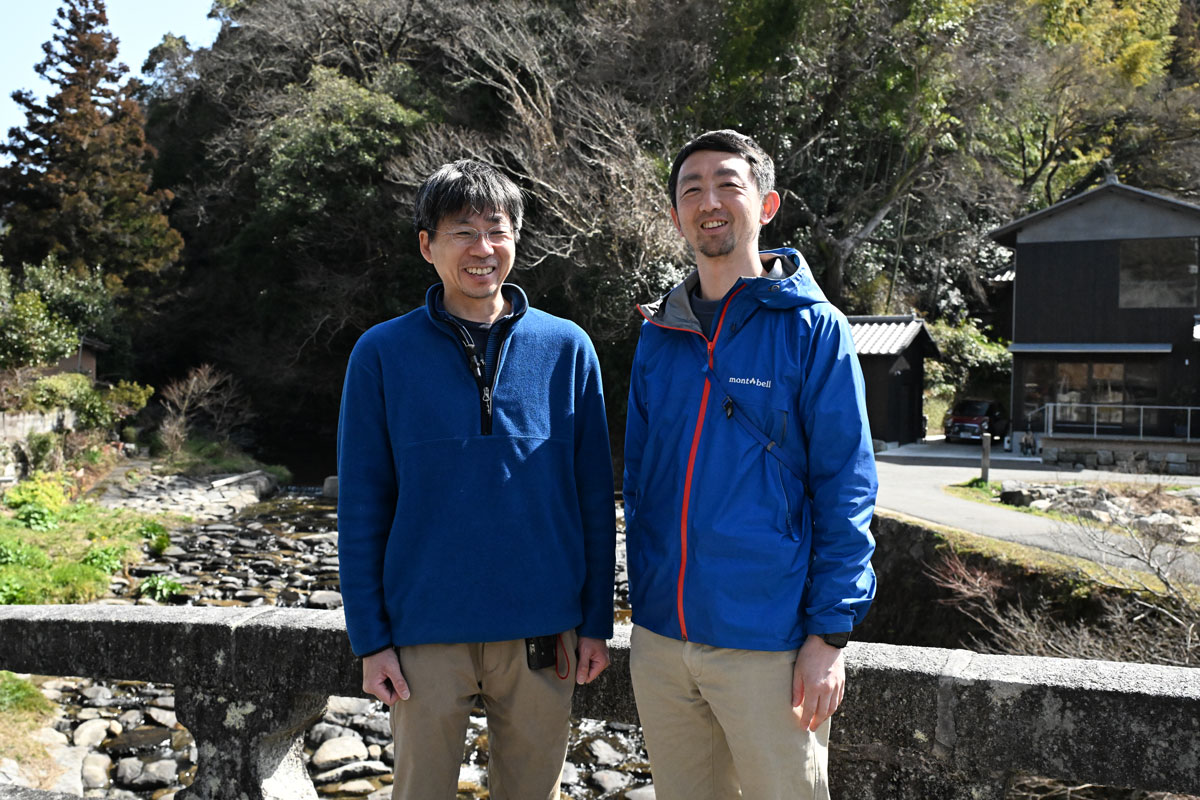
On the edge of the Notori River basin in the Akizuki district, a historic former castle town within Asakura, a single farmhouse overlooks a pond fed by a redirected stream. Hironori Hayashi, Associate Professor at Kyushu University’s Faculty of Engineering, crouches at the inlet, adjusting a small sensor set into the bank. Water runs through the stone-lined channel before opening into the basin. A few meters away, Yuichi Kano, Specially Appointed Associate Professor at the same faculty, reaches into the shallows and lifts a cluster of frog eggs between his fingers, turning them slightly in the light before lowering them back into the water.
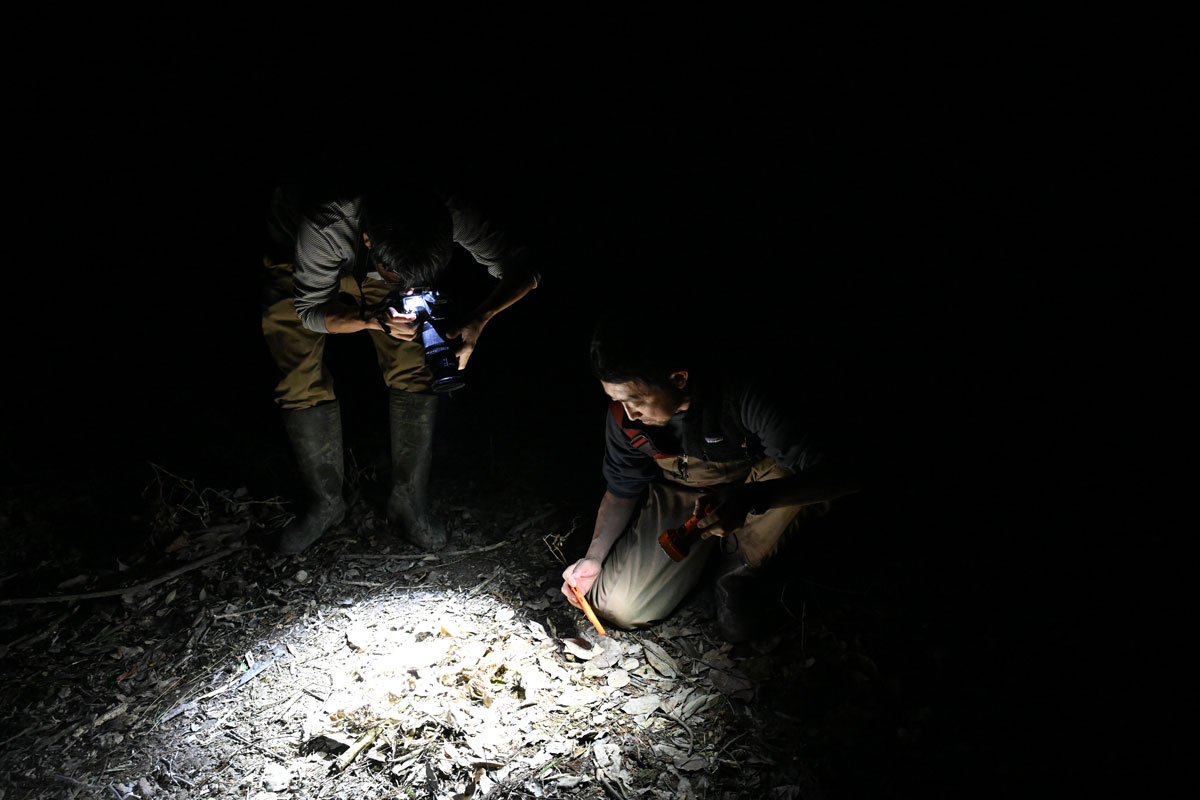
Hayashi and Kano are documenting frogs during a nighttime survey in Akizuki. As frogs are most active at night, particularly during the breeding season, favorable weather often prompts last-minute trips from Fukuoka for fieldwork.
The two researchers are looking for signs that the restored environment is working, tracking species such as the Japanese toad (Bufo japonicus). Their project, titled “Community-led nature positive restoration at watershed scale in a biodiversity hotspot of Japan,” is one of only four projects worldwide selected by the National Geographic Society’s World Freshwater Initiative and the only one from Japan.
“The residents recognized the yellow-bordered book [of National Geographic],” Hayashi says with a laugh. “Originally, the residents sympathized with our approach and offered us their abandoned farmland, and they are delighted to know that this has caught the attention of National Geographic”.
Hayashi has known this area of Akizuki since childhood. Akizuki and the Notori River, which his family visited during every long vacation, were the ideal playgrounds of his childhood. Those experiences have become the foundation for his current work. As he began researching rivers, he became increasingly fascinated by the Notori River. At the same time, he also witnessed firsthand the challenges facing the region.
Since then, he has worked to restore abandoned rice fields to wetlands and forest habitats, improving groundwater recharge and helping reduce the risk of flooding and landslides. Kano, whose earlier research focused on freshwater fish, shares a similar interest in sustaining rivers that support life, agriculture, and ecosystems, and later joined Hayashi’s project. Together, they have conducted a series of projects across the village, moving between different waterways and remote field sites.
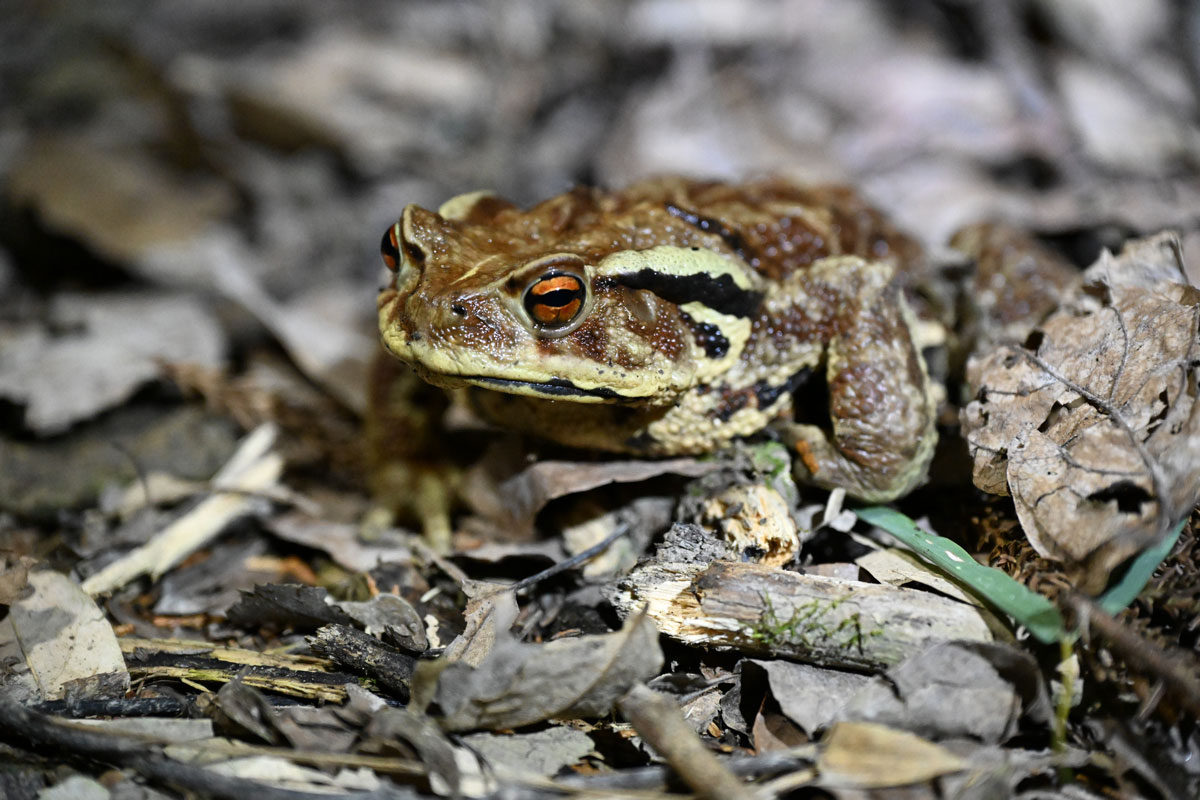
A Japanese common toad spotted in Akizuki. Although the Notori River basin covers only 0.02% of Kyushu Island, it is home to nine of the island’s ten frog species.
The stones Hayashi navigates were placed there long ago as part of a bukeyashiki, or samurai residence, that once stood on this ground. Meticulously shaped and layered using traditional methods, they represent a form of brilliant river engineering known as Ishidatamizeki. Many of the channels in Akizuki predate the Edo period, established by villagers who redirected the mountain-fed streams to irrigate their crops and protect the town from flooding. Hayashi was one of the first to recognize the value of these historic stone structures and rural landscapes. For nearly 15 years, he has been engaged in their conservation and scientific evaluation.
“The community has also been the center of our work here for a long time,” Hayashi said, wiping mud from his hands. “We are working together with the people who actually live alongside these channels.”
One partner in this effort is Kyusuke Takaki, a tenth-generation local craftsman whose family has lived in Akizuki since 1819. Decades ago, Takaki’s father spent 15 years trying to turn this land into a tourist destination for iris viewing, but the project was eventually abandoned because the manual labor was too intense.
The land sat dormant until Hayashi arrived for a visit. He recalled the irises, but he also brought insight from his recent biological surveys: while the Notori River basin covers only 0.02% of Kyushu Island, it is home to nine of the island’s ten frog species.
“I was surprised,” Takaki says, standing near the water. “I grew up seeing these frogs, but I never knew our backyard was home to nearly every species found across Kyushu.”
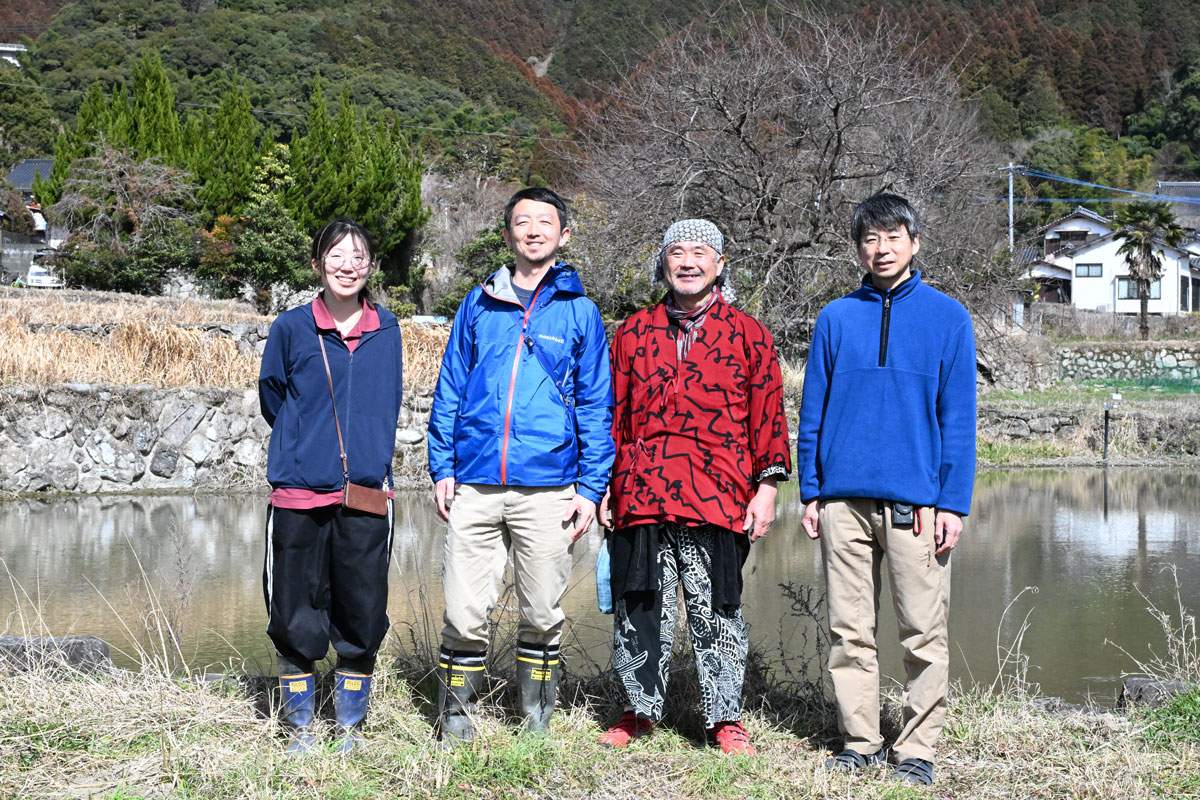
Hayashi and Kano’s project goes beyond their own research. By integrating education and community engagement, they support nature-positive, community-led restoration and the development of more resilient river systems.
Upon hearing this, Takaki offered the field to the researchers. He got his tractor back out for shirokaki, a traditional method of soil puddling, to ensure the ground could hold water again. It took two years of tilling and managing water levels before the pond finally stabilized. On any given afternoon, Hayashi and Kano can be found here alongside their graduate students, the team—including Rina Otake and Teruto Kita—wading waist-deep in the water, logging the movements of species like the Japanese newt (Cynops pyrrhogaster).
Hayashi stops and points toward a particularly tight joint where two massive river stones meet in the channel feeding the pond. “You have to realize that moving and stacking these stones without a crane was a revolutionary technology,” Hayashi explains. “In Akizuki, this skill was used to manage the water from the very top of the mountain. It was a brilliant way of thinking, but it has largely been lost,” Kano adds.
Ishidatamizeki is a traditional form of river engineering in Akizuki, with a history dating back to the Edo period. In their research, the structure has been quantitatively analyzed for its ability to reduce flow energy during floods.
Kano turns from the wall to the water, gesturing toward the stones and soil. He speaks as if something lives in each part of the landscape. Recently, he documented the Japanese wrinkled frog (Glandirana rugosa) vocalizing underwater during a survey in Yamagata Prefecture, a behavior that went unnoticed for years. Here in Akizuki, that same attention is directed toward quieter signs of life in the water.
“People ask me if there is an economic benefit to protecting these creatures,” Kano says. “But in Akizuki, the environment is the tourism resource. Protecting these wild spaces is a plus for the economy when you think on a long-term scale. And beyond that, nature and biodiversity hold an intrinsic value of their own.”
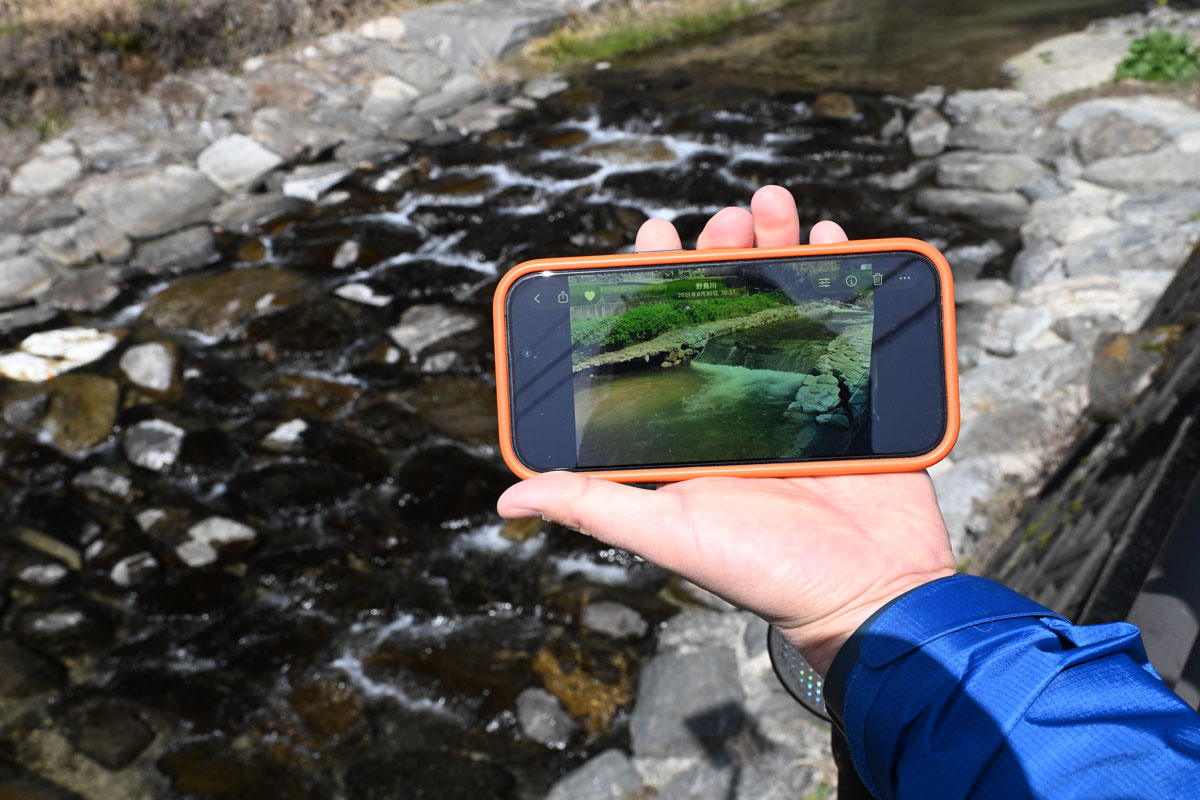
Learning from local people that concrete weirs are easily damaged, Hayashi’s team joined forces with builders and residents to restore traditional structures that reduce water flow. The impact goes beyond disaster prevention, supporting biodiversity and preserving the local landscape.
Their work is not measured in days or seasons. Hayashi and Kano are thinking in centuries, envisioning a landscape that may not fully take shape for a hundred or two hundred years. Yet something keeps driving them forward—a quiet conviction, perhaps, that the work is worth doing, regardless of when the results arrive.
The channels Hayashi first saw as a child are still in place, now observed through a different lens. He pauses at one section of the bank, watching how the water moves through the gaps in the stone. In his research, he has tested similar structures using scaled hydraulic models, showing how their rough, uneven surfaces break up the flow and reduce its force during periods of high water. The team’s research revealed that historical stone weirs reduce the maximum flood flow energy by approximately 30% compared to modern concrete weirs. Kano notes that those same gaps also benefit aquatic life. The spaces between the stones trap sediment and slow the current, creating sheltered spots where fish and insects can establish themselves.
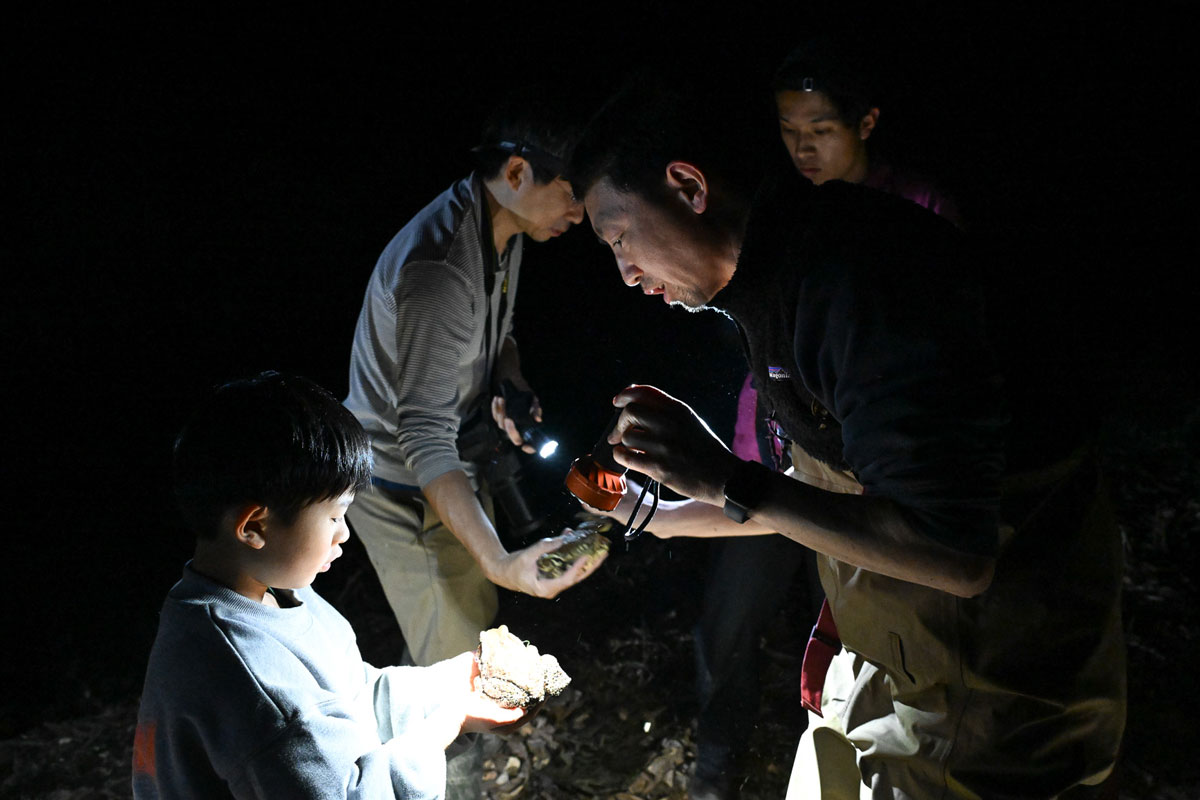
Hayashi introduces a young participant to the science behind a toad during a nighttime survey. The team welcomes local residents and children to join their fieldwork, providing opportunities for curious minds to experience science firsthand and connect with the natural world.
As they move through Akizuki, Hayashi and Kano speak about the landscape as though each part of it carries its own role: the stones shaping the current, the wetlands storing water, the insects and frogs returning on their own. They connect this way of thinking to Yaoyorozu no Kami, a uniquely Japanese belief that every element of the natural world carries its own presence and worth, rooted in harmony between people and nature rather than control or conquest.
Together with local craftsmen, students, and residents who have farmed this land for generations, Hayashi and Kano are building toward something they describe simply as ii kawa, ii ryūiki, ii shakai: good rivers, good watersheds, a good society. Yet their vision reaches further. Hayashi and Kano believe that the Japanese view of nature may itself be one of the answers to a more sustainable world—a bridge of wisdom flowing from the village stream to the planet's great water systems.
Nature has always been speaking to us: in currents, in the slow persistence of moss on stone, and in the return of frogs to a flooded field. So when the waters whisper, our job is to listen.
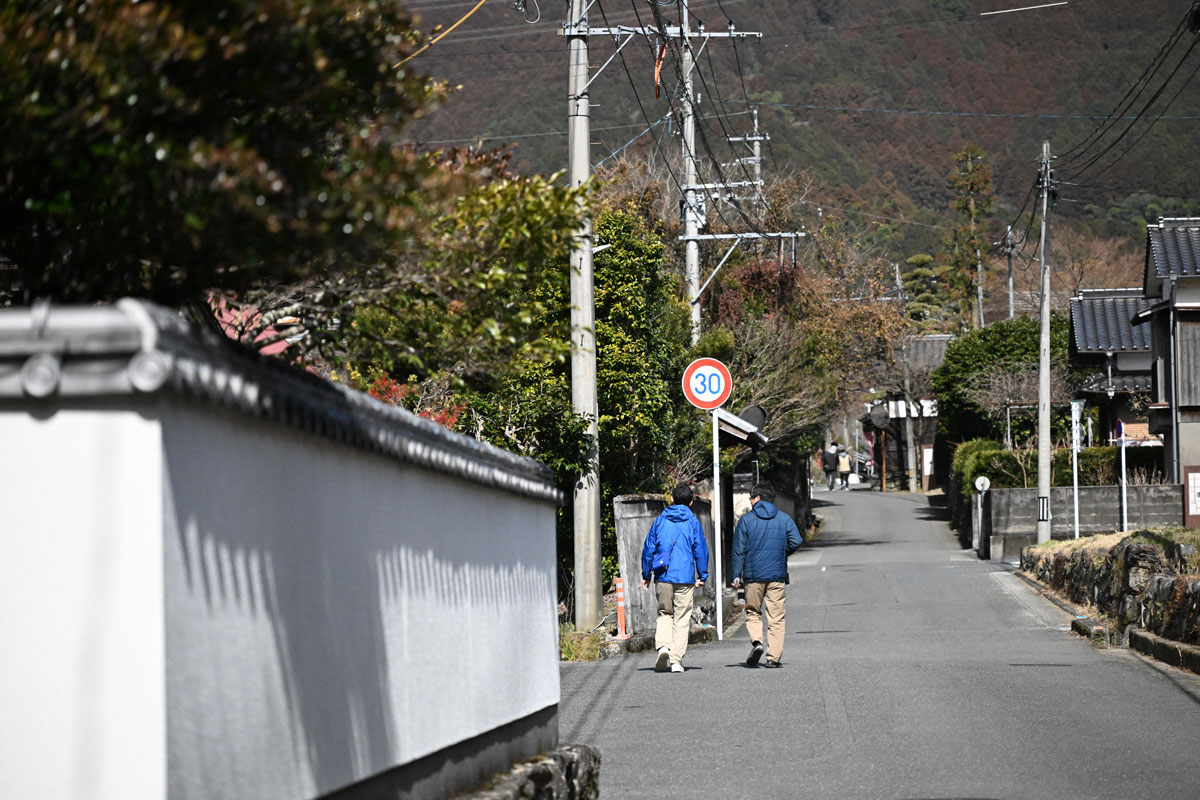
Akizuki is a historic castle town in Asakura. Beyond their research, Hayashi and Kano also spend time engaging with local residents.