

































ニュース News
News: SDGs 9
-

-
Research ResultsPhysics & ChemistryInvestigating the underlying mechanisms of magnetic reconnection in space weather events Experiments reveal that the rate at which magnetic fields release energy is controlled by the local physics of reconnection layer
Associate Professor Taichi Morita
Faculty of Engineering Sciences
2026.09.18
-

-
Research ResultsHumanities & Social SciencesLife & HealthMaterialsEnvironment & SustainabilityJapanese Hinoki root essential oil may support better sleep at home Pilot study suggests an underused forestry resource could offer new value in aroma-based relaxation products
Kuniyoshi Shimizu, Associate Professor
Faculty of Agriculture
2026.09.16
-

-
Research ResultsMaterialsTechnologyEnvironment & SustainabilityToward future-ready food packaging where materials meet AI Kyushu University researchers propose a framework for packaging that senses, learns, and acts, moving from a passive barrier into an active, AI-powered tool against food waste
Professor Fumihiko Tanaka
Faculty of Agriculture
2026.09.11
-

-
Research ResultsPhysics & ChemistryUnder pressure: How a deep-sea protein adapts to an extreme environment Researchers uncover the molecular strategy that enables PoXeR, a light-driven protein found in deep-sea microorganisms, to adapt to extreme pressure
Professor Gaku Fukuhara
Institute for Materials Chemistry and Engineering
2026.09.10
-

-
Research ResultsLife & HealthMaterialsEnvironment & SustainabilityUsing Japanese Igusa (rush grass) may enhance mood, stress resilience, and task engagement EEG tests show that Igusa use is associated with increased activity in brain regions related to concentration and engagement
Associate Professor Kuniyoshi Shimizu
Faculty of Agriculture
2026.09.08
-
-
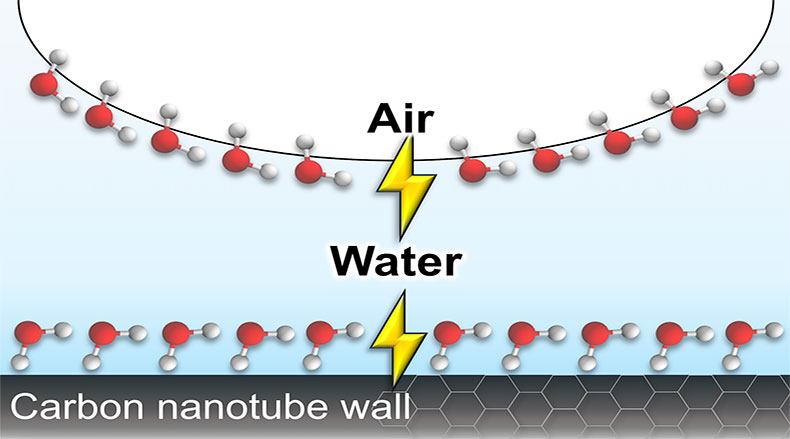
Research ResultsPhysics & ChemistryScientists ‘see’ nanoscale forces, providing evidence of electric fields at the air‑water interface Using 3D electron microscopy, researchers have captured direct evidence for a long‑debated electric field at air-water interfaces, opening a path to rationally designed clean‑energy materials.
Associate Professor Qin-Yi Li
Faculty of Engineering
2026.08.18
-

-
Research ResultsEnvironment & SustainabilityHow 'smart' hydrogel packaging tells you if your food is still fresh By fixing a natural pigment onto a metal-organic framework, Kyushu University researchers developed a self-healing hydrogel that reliably signals spoilage through color change while extending food shelf life
Professor Fumihiko Tanaka
Faculty of Agriculture
2026.08.06
-
-
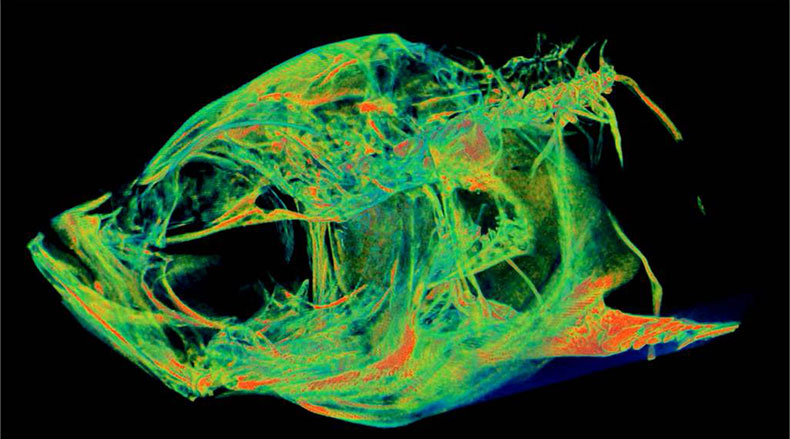
NoticesCrowdfunding launched Research using zebrafish to uncover the underlying mechanisms of rare craniofacial disorders 2026.08.06
-
-
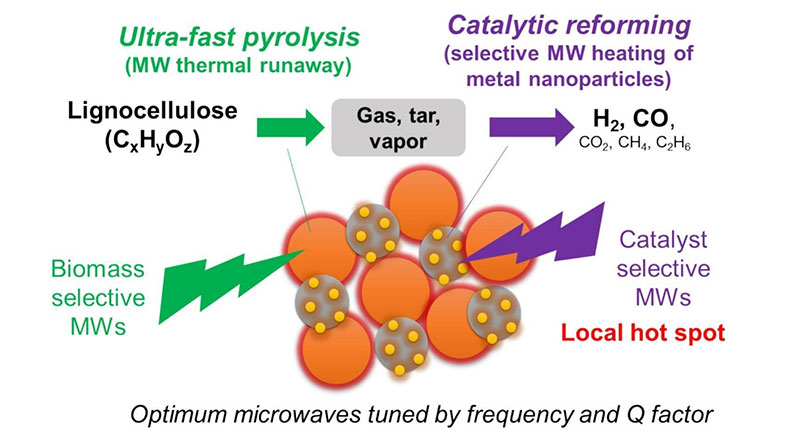
Research ResultsEnvironment & SustainabilitySelective microwave heating speeds bamboo-to-hydrogen fuel conversion Experiments reveal microwaves create localized hot spots on catalyst particles, boosting biomass conversion and paving the way for electrified, low-carbon chemical manufacturing
Professor Shuntaro Tsubaki
Faculty of Engineering
2026.08.03
-
-
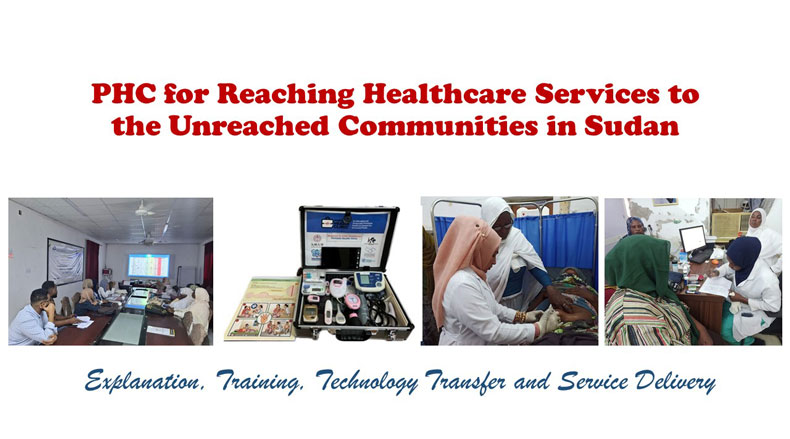
NoticesKyushu University pilots telemedicine program to support pregnant women in conflict-affected Sudan: Supporting the restoration of maternal and child health services through Portable Health Clinic (PHC) 2026.07.28
-

-
Research ResultsLife & HealthScientists find compound that may help muscles stay strong as we age The compound strengthens HGF, a protein that helps activate muscle repair, offering hope for future treatments of age-related muscle loss in humans and pets
Professor Ryuichi Tatsumi
Faculty of Agriculture
2026.07.24
-
-
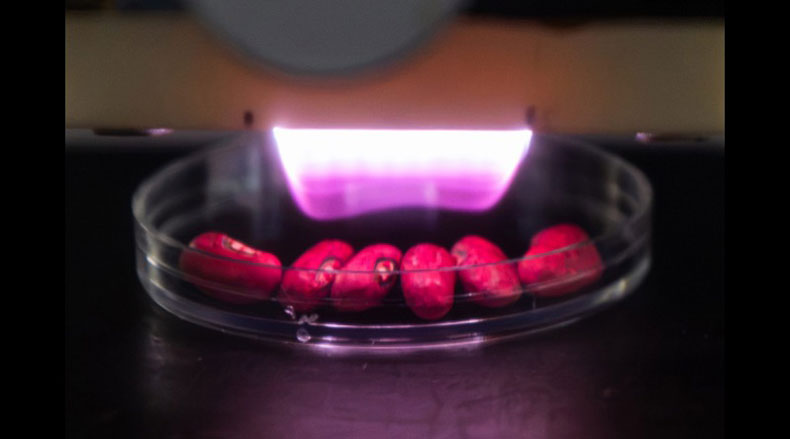
Research ResultsPhysics & ChemistryTechnologyEnvironment & SustainabilityPlasma Agriculture makes strides towards super-seeding conventional methods Researchers review the latest results and understanding of mechanisms behind this new field of research where seeds show higher yields and resilience following flash treatment in low-temperature plasma
Professor Kazunori Koga
Faculty of Information Science and Electrical Engineering
2026.07.24
-
-
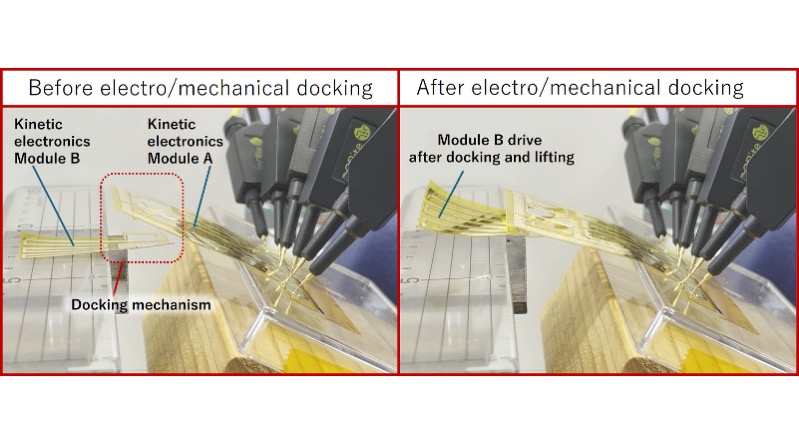
Research ResultsMaterialsTechnologyThin-film electronics that can move and become their own connectors Researchers develop prototype thin-film electronics that can dock and undock themselves
Associate Professor Fumihiro Sassa
Faculty of Information Science and Electrical Engineering
2026.07.17
-

-
Research ResultsPhysics & ChemistryRewriting the reactivity rules: A new catalyst for recycling mixed plastics Japanese researchers have developed a catalyst that selectively degrades polyurethane in mixed plastic waste, opening a practical route to recycling materials long considered too complex to separate
Professor Takanori Iwasaki
Faculty of Engineering
2026.07.10
-

-
Research ResultsEnvironment & SustainabilityWasted pumpkin peel can keep your food fresh Kyushu University researchers have turned agricultural by-products into a biodegradable food packaging material, offering a potential approach to both food loss and plastic pollution
Professor Fumihiko Tanaka
Faculty of Agriculture
2026.07.06
-
-
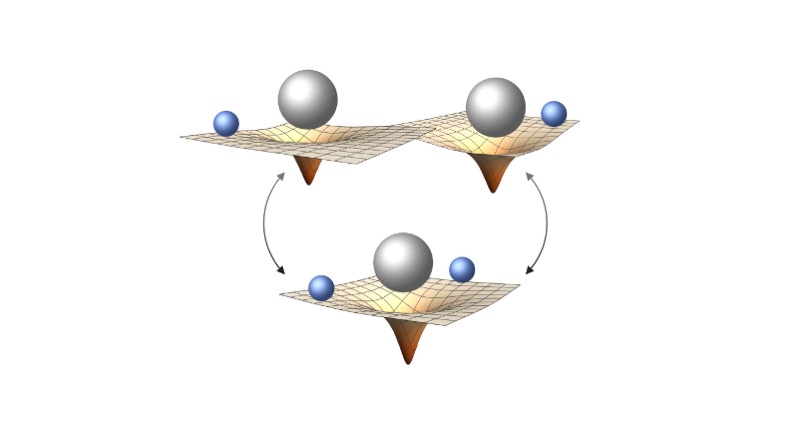
Research ResultsHumanities & Social SciencesPhysics & ChemistryA new theoretical framework to identify what quantum gravity would look like Researchers develop ‘Relativity of Spacetime Superpositions,’ a theoretical framework that will show what experimental signatures identify quantum gravity
Associate Professor Joshua Foo
Institute for Advanced Study
2026.07.02
-

-
Research ResultsPhysics & ChemistryExploring the origin of freely adjustable parameters in the fundamental equations of nature Study offers new clues into the mystery of free parameters in quantum gravity
Associate Professor Yuya Kusuki
Institute for Advanced Study
2026.06.17
-
-
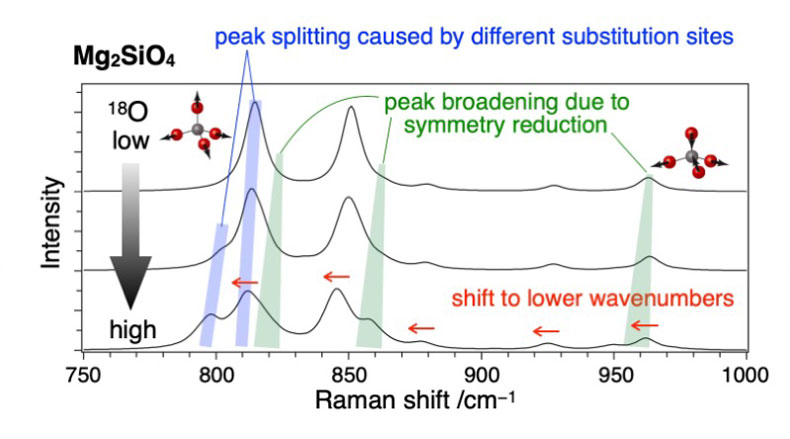
Research ResultsPhysics & ChemistryDeveloping a theoretical model to understand how isotopes change spectroscopy results Researchers investigate how oxygen isotopes in forsterite (Mg2SiO4) affect Raman spectroscopy results to develop a theoretical framework for better interpretation of spectral data
Associate Professor Masashi Arakawa
Faculty of Science
2026.06.09
-
-
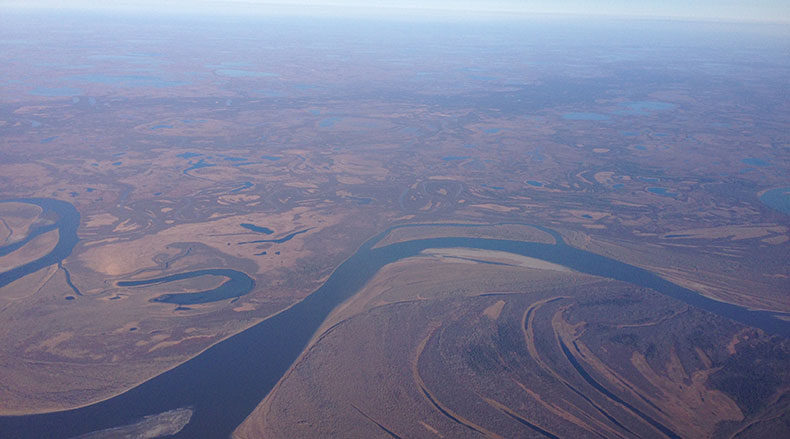
Research ResultsHumanities & Social SciencesEnvironment & SustainabilityHow Alaska Native communities navigate a potential $170 billion gold mine Japanese researchers find that simple ’support’ or ’opposition’ cannot capture the full complexity of Alaska Native communities’ decision-making
Associate Professor Hiroko Ikuta
International Student Center
2026.05.29
-

-
Research ResultsMath & DataTechnologyUnstable software tests cause issues that spread across projects Researchers find that over half of projects in the popular OpenStack ecosystem are affected by shared instability from “flaky tests”
Professor Yasutaka Kamei
Faculty of Information Science and Electrical Engineering
2026.05.26
Search
Search