


































研究成果 Research Results
- TOP
- News
- Research Results
- Even substitute PFAS cause metabolic stress in zebrafish embryos
 Even substitute PFAS cause metabolic stress in zebrafish embryos
PFBS (Perfluorobutanesulfonic acid) exposure leads to genetic, metabolic, and morphological disruptions in zebrafish embryos
Tse Ka Fai William
Faculty of Agriculture
2026.11.11Research ResultsLife & HealthEnvironment & Sustainability
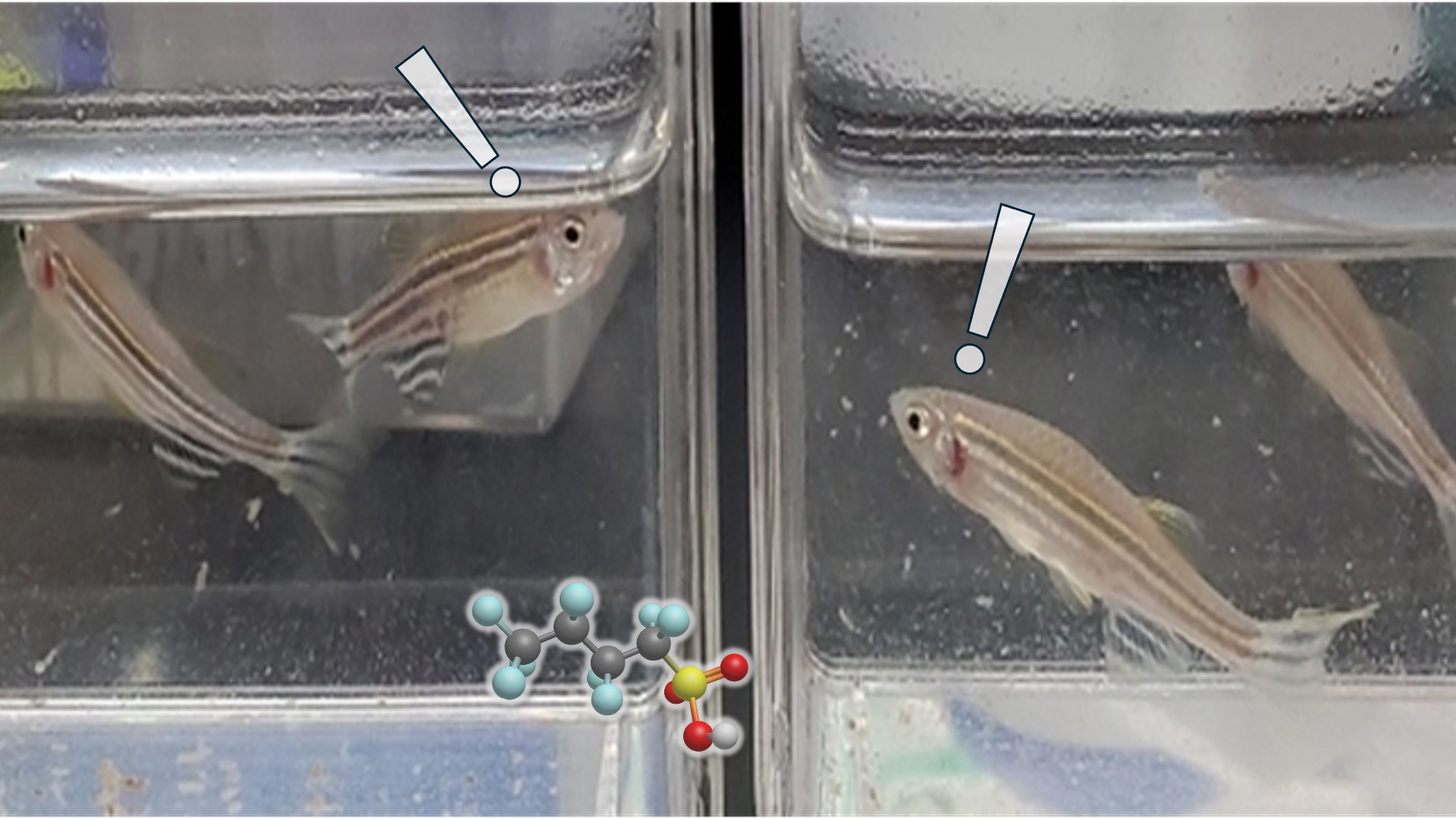
Fukuoka, Japan—Publishing in the Journal of Hazardous Materials Advances, researchers from Kyushu University used zebrafish embryos to study the health effects of the PFAS called PFBS (Perfluorobutanesulfonic acid), a substitute PFAS thought to be safer than traditional compounds. They found that while PFBS did not generate any obvious external dysfunction, the compound still gets absorbed and accumulates in the zebrafish embryo. Results showed that PFBS caused disruptions in the metabolic pathways for sugars and fat, which led to oxidative stress. Embryos also showed physical dysfunction in heart function, facial development, nervous system development, and visual response.
The results suggest that while PFBS could be considered safer than other PFAS, exposure to it may still cause negative effects on living organisms.
PFAS (Per- and polyfluoroalkyl substances) are a category of highly stable chemical compounds that can be found in many industrial and consumer products. But because they are so stable and do not break down, they accumulate in the environment and in the human body, giving them the alternative name “forever chemicals.” Alternative forms of PFAS have been developed over the years with the hope that they are less toxic and not likely to accumulate in the body.
“PFAS can be found in everything from the non-stick coating on your frying pan to dental floss. Well-known PFAS such as PFOS and PFOA have been increasingly restricted in Japan and elsewhere due to their risk to human health and the environment,” explains Associate Professor William Ka Fai Tse from Kyushu University’s Faculty of Agriculture, who led the study. “Structurally, PFBS has a shorter carbon chain and is thought to be less harmful to organisms. Our group has studied PFAS toxicity for many years and wanted to test if this alternative is better. We used zebrafish embryos to examine how PFBS affects metabolism, cellular stress, and developing organs."
The team exposed zebrafish embryos to various concentrations of PFBS and observed its effects. First, they found that PFBS is absorbed by the embryos and that it accumulates over time inside the body. RNA sequencing of the embryos showed disruption in gene expression in key metabolic pathways involving glucose and fat.
“Specifically, expression of genes involved in the TCA cycle and lipid metabolism was disrupted. We also detected elevated reactive oxygen species, increased mitochondrial dysfunction, and elevated levels of cell death,” continues Tse. “These were signs of elevated oxidative stress, which we hypothesize is a result of the disruptions in the metabolic genes.”
Although the PFBS-exposed zebrafish embryos appeared normal, biochemical analyses showed significant underlying cellular and morphological changes. Histological analysis showed subtle structural abnormalities in the heart and possible impaired cardiac performance. The embryos also exhibited minor skull deformations, suggesting developmental irregularities in bone structure. Imaging analysis showed a decrease in neural tissue, indicating reduced neural development, and behavioral assays suggest that visual development was also impaired.
The study demonstrates that PFBS can still be detrimental despite being a substitute for more toxic PFAS, especially during the embryonic stage. More study is needed to understand the full effects of PFBS in an organism, such as how it affects adults and whether there are any transgenerational effects of this toxicity.
“We would also like to investigate ways to better detect and remove these newer PFAS from the environment,” concludes Tse. “PFAS contamination is a concerning issue in both environmental pollution and public health. Many of these replacement PFAS compounds remain poorly regulated. Companies need to closely study any new compound they create and communicate any risks they find.”
###
For more information about this research, see "Perfluorobutane sulfonate induces metabolic stress leading to cellular stress and developmental defects in zebrafish embryos," Zulvikar Syambani Ulhaq, Delbert Almerick T. Boncan, Da-Wei Liu, Chen Hsu, Jingru Qin, Jen‐Kun Chen, May-Su You, Ting Fung Chan, Yukiko Ogino, Yun-Jin Jiang, Keng Po Lai, William Ka Fai Tse, Journal of Hazardous Materials Advances, https://doi.org/10.1016/j.hazadv.2026.101596
Research-related inquiries
Tse Ka Fai William, Associate Professor
Faculty of Agriculture
Contact information can also be found in the full release.
- TOP
- News
- Research Results
- Even substitute PFAS cause metabolic stress in zebrafish embryos