


























研究成果 Research Results
- TOP
- News
- Research Results
- Study tracks what students learn from online teamwork and fieldwork abroad
 Study tracks what students learn from online teamwork and fieldwork abroad
Agriculture students reported growth in teamwork and communication through COIL+, while follow-up interviews documented how some applied their learning in other settings
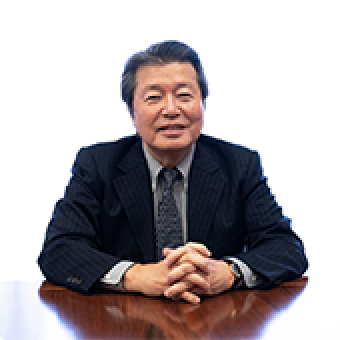
Assistant Professor Bang Hyunjung
Faculty of Agriculture
2026.11.17Research ResultsHumanities & Social SciencesEnvironment & Sustainability
Fukuoka, Japan—Can a solution that cuts food waste in Tokyo work in Seoul too? Exploring a familiar problem with peers abroad can help students question what they take for granted at home and see how their knowledge might apply to real-world sustainability challenges. As educators put time and care into designing international courses, what do students take away from the experience, and what stays with them after the course ends?
In a study published in August 2026 in the International Journal of Sustainability in Higher Education, Kyushu University researchers examined what agriculture students gained from Collaborative Online International Learning Plus (COIL+), a program that pairs online teamwork with fieldwork.
“As educators, we can create opportunities to learn, but even in the same classroom, students take away different things. It’s harder to know how that learning is sustained over time,” says Assistant Professor HyunJung Bang of Kyushu University’s Faculty of Agriculture. “We were interested in two related questions: how students put sustainability ideas into practice, and whether the skills they developed through international collaboration continued to be useful beyond the program.”
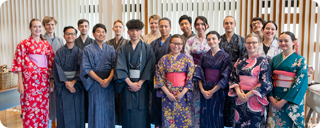
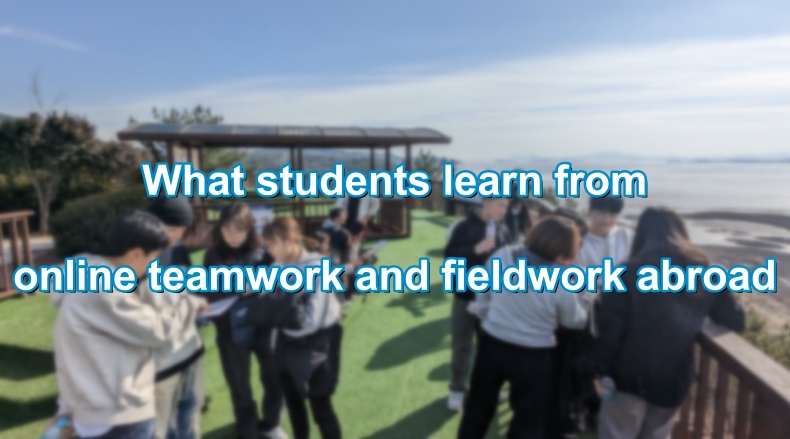
Kyushu University began using COIL during the COVID-19 pandemic so students could work with peers abroad while travel was restricted. As restrictions eased, the university added fieldwork, the “plus” in COIL+. In the courses studied, teammates who first met online visited each other’s countries, taking part in activities such as turning leftover brewing grain into cookies in South Korea and visiting smart farms in Japan.
In an earlier study, Bang found that students linked the Sustainable Development Goals (SDGs) to local issues they encountered. About 70% reported continuing sustainability-related actions. In the new study, the team looked beyond changes in daily habits to ask which soft skills students felt they had developed through cross-cultural teamwork, and whether they used them elsewhere.
Across three COIL+ courses offered during the 2022–2024 academic years, 21 of the 51 students enrolled completed an anonymous post-course survey. Nine students took part in focus groups held about four and nine months after the courses ended.
The survey showed that students felt they had improved most in teamwork and communication. Qualitative analysis highlighted three processes that supported learning: collaboration across cultural and disciplinary boundaries, psychological safety that encouraged students to take on leadership roles, and engagement with authentic sustainability challenges. One focus group participant described how a shared goal helped the team overcome language barriers. Another said they felt more confident leading an international team after the fieldwork. One participant also gave an example of how they used problem-solving skills from the program in other courses.
“Some of our Japanese students were hesitant to speak English at first,” Bang recalls. “Whether they were talking in class online or chatting at the bus stop on a field trip, they began to realize they could make themselves understood even if their English wasn’t perfect. What interests me as a teacher is what people in different places can bring to the same subject, and I loved hearing them switch between languages in a single conversation.”
The researchers plan to investigate how students move across digital, cultural, knowledge–practice, and temporal boundaries, and to develop transferable design principles for international collaborative learning in agricultural higher education. Future research may also explore whether participants continue to apply these skills in their later studies and professional lives.
“I hope these findings will also help educators as they design their courses,” Bang adds. “Universities can turn differences in place, culture, and experience into learning resources. I’d love to see more of us work across campus and national boundaries, drawing on local knowledge from different settings to bring fresh perspectives into the courses we teach.”
###
For more information about this research, see "COIL+: integrating experiential and blended learning to advance soft skills and global competence in sustainability education," Abrianna Elke Chairil, HyunJung Bang, David M. Rosch, International Journal of Sustainability in Higher Education, https://doi.org/10.1108/IJSHE-10-2025-1256
Research-related inquiries
HyunJung Bang, Assistant Professor
Faculty of Agriculture
Contact information can also be found in the full release.
- TOP
- News
- Research Results
- Study tracks what students learn from online teamwork and fieldwork abroad