


































研究成果 Research Results
- TOP
- News
- Research Results
- Four decades of citizen science reveal widespread declines in native plant distributions in Japan
 Four decades of citizen science reveal widespread declines in native plant distributions in Japan
A study of 1,864 native plant species in Kanagawa Prefecture identifies 53 potentially overlooked conservation priorities
Professor Akiko Satake
Faculty of Science
2026.11.24Research ResultsEnvironment & Sustainability
Fukuoka, Japan—A new study led by researchers at Kyushu University has found that nearly 45% of 1,864 native plant species surveyed across Kanagawa Prefecture, Japan, were recorded in fewer locations over approximately four decades. The findings, published in Communications Biology on September 15, 2026, show how long-running citizen science surveys can reveal biodiversity changes that conventional assessments focused on threatened species may miss.
The researchers analyzed plant distribution records collected across Kanagawa Prefecture during three survey periods: 1979–1987, 1996–2000, and 2013–2017. These surveys relied on volunteers who documented whether plant species were present in approximately 110 districts across the prefecture. The resulting dataset offers a rare opportunity to examine the changing distributions of a wide range of native plant species over nearly four decades.
Of the 1,864 native vascular plant species analyzed—a group that includes trees, flowering plants, and ferns but excludes mosses—835 (44.8%) showed a decline in the number of districts where they were recorded, while 688 (36.9%) showed an increase. Declines were especially pronounced among plants that grow in grasslands, along forest edges, and in upland fields. These habitats are characteristic of traditional Japanese “Satoyama” landscapes, which have historically been maintained through human activities. As practices such as mowing and coppicing—the periodic cutting of woodland trees to encourage regrowth—have declined, trees and shrubs may have spread into formerly open areas, reducing suitable habitat for plants that depend on sunlight.
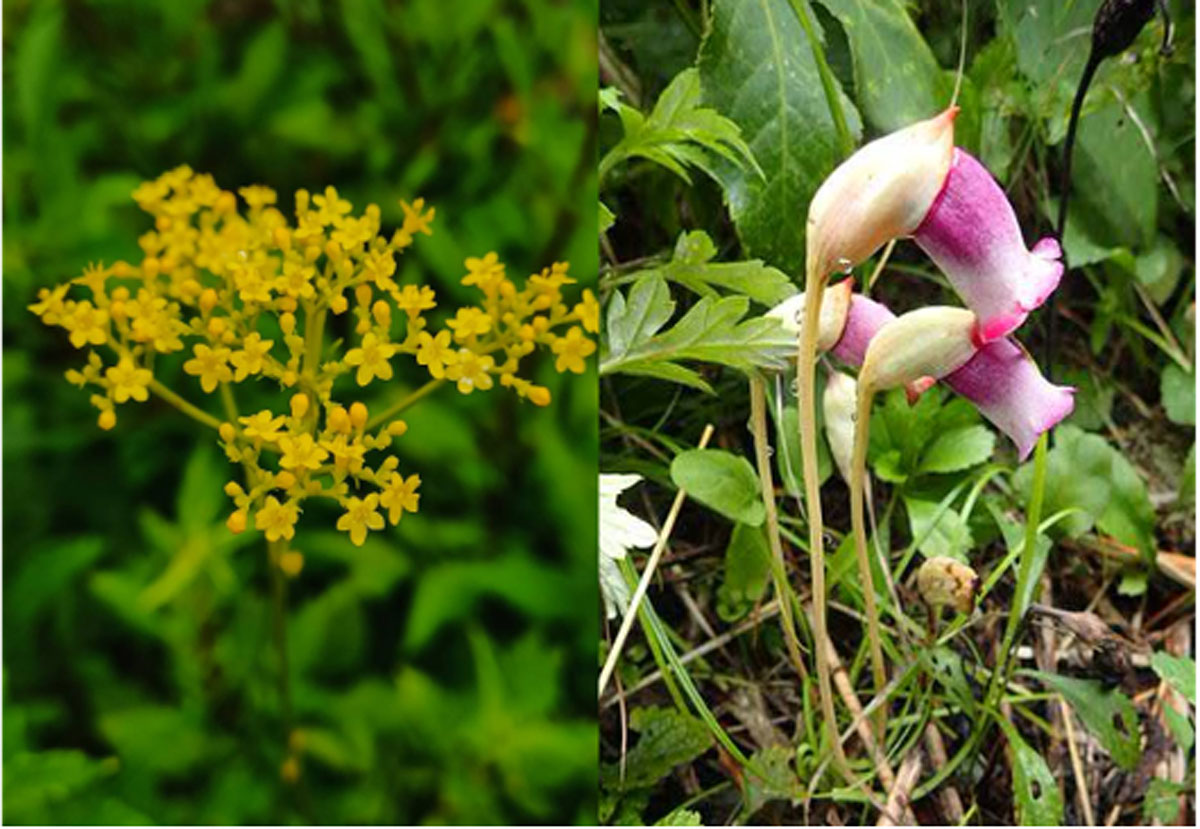
In contrast, species that thrive in evergreen forests tended to expand, particularly certain ferns and orchids that obtain nutrients through associations with fungi. The researchers suggest that the same changes in woodland management may help explain this expansion. When trees are no longer regularly cut for firewood and charcoal, evergreen trees can gradually take over, creating darker, more humid evergreen environments favorable to these plants.
“The population data needed to estimate extinction risk for Japan’s plant Red Lists are becoming increasingly difficult to collect as surveyors age and their numbers decline,” says Professor Akiko Satake at Kyushu University’s Faculty of Science. “We therefore wanted to develop an assessment method based on occurrence records, which are less labor-intensive to collect than population counts.”
To identify species whose conservation needs might have been overlooked, the team calculated how frequently each species was no longer found in districts where it had previously been recorded. They compared these rates with those of species already classified as threatened on Kanagawa Prefecture’s Red List. This analysis flagged 53 species with declining distributions that were not classified as threatened in Kanagawa, yet had disappearance rates at least as high as the median for threatened species in both intervals between surveys. The researchers termed these “potentially threatened species,” and the Flora-Kanagawa Association has already begun follow-up surveys of these 53 species.
“Our findings highlight the need to monitor not only threatened species but also common plants, many of which are showing declining distributions,” says Chihiro Myotoishi, the paper’s first author and, at the time of the research, a PhD student at Kyushu University’s Graduate School of Systems Life Sciences. She also emphasizes the importance of citizen participation in biodiversity monitoring: “This study was made possible by decades of work by citizen surveyors and a regional museum. Sustaining such efforts requires long-term support from society.”
As governments and businesses increasingly pursue nature-positive goals, long-term records like these can help turn those ambitions into informed conservation action. By revealing changes in both threatened and common plants, they could guide the management of Satoyama landscapes and other green spaces, while connecting local knowledge to broader efforts to protect biodiversity.
###
For more information about this research, see " Citizen science reveals patterns of distributional decline and expansion across 1864 native vascular plant species in Kanagawa, Japan” Chihiro Myotoishi, Akiko Satake, Wataru Ohnishi, Tetsukazu Yahara, Communications Biology, https://doi.org/10.1038/s42003-026-10929-y
Research-related inquiries
Akiko Satake, Professor
Faculty of Science
Contact information can also be found in the full release.
- TOP
- News
- Research Results
- Four decades of citizen science reveal widespread declines in native plant distributions in Japan