































研究成果 Research Results
- TOP
- News
- Research Results
- Using Japanese Igusa (rush grass) may enhance mood, stress resilience, and task engagement
 Using Japanese Igusa (rush grass) may enhance mood, stress resilience, and task engagement
EEG tests show that Igusa use is associated with increased activity in brain regions related to concentration and engagement
Associate Professor Kuniyoshi Shimizu
Faculty of Agriculture
2026.09.08Research ResultsLife & HealthMaterialsEnvironment & Sustainability
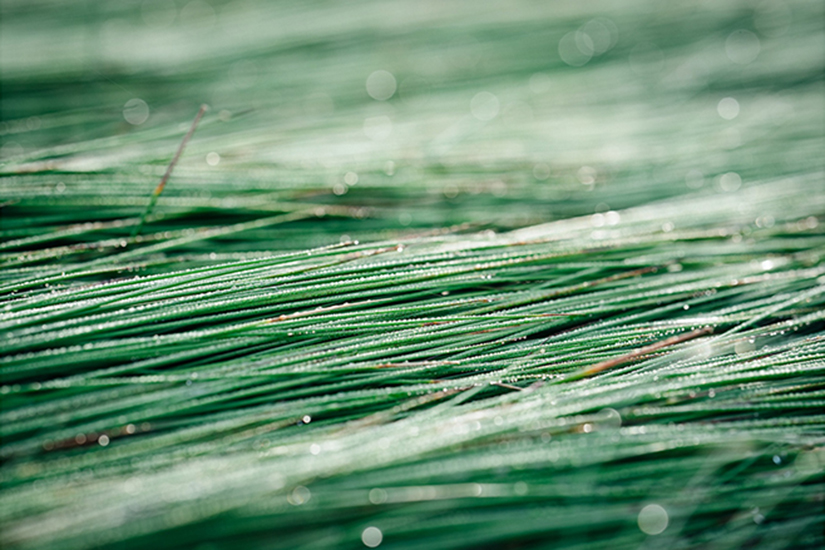
Fukuoka, Japan—Publishing in the journal Scientific Reports, researchers at Kyushu University found that using mats made from Japanese Igusa, or rush grass, was associated with increased activity in regions of the brain related to concentration and engagement. Furthermore, surveyed participants reported reduced tension and anxiety after using Igusa mats. Igusa has been used in Japan for centuries, and the research team hopes scientific evidence on its health benefits will provide new value for this traditional material.
What is the first thing you notice when you walk into a Japanese-style room? Is it the floor-level furniture? The sliding wood-and-paper doors? Or is it the smell? Also called a tatami room—or Washitsu in Japanese—these spaces are defined by their tatami flooring, which has been part of Japanese culture and architecture for centuries. The unique smell of the Washitsu comes from the tatami, specifically the Igusa that makes up the mat surface.
“In Japan, the scent of Igusa is associated with comfort and relaxation. However, there is very little scientific evidence to support such claims,” explains Associate Professor Kuniyoshi Shimizu from Kyushu University’s Faculty of Agriculture, who led the study. “Our team has been using objective scientific methods to investigate the effects of Igusa on people. Previously, we showed that the aromatic compounds in Igusa have relaxing effects. This time we wanted to explore other benefits like mood, stress resilience, and task engagement.”

In their experimental setup, the team placed volunteers in a soundproof room under two conditions: sitting on Igusa mats or sitting on unscented polypropylene plastic mats. The volunteers then completed simple tasks while the team measured their reaction time and brain activity using an electroencephalograph (EEG). Afterward, the team conducted psychological questionnaires to assess the volunteers’ stress and comfort.
“We had a total of 17 volunteers with an average age of 21.5 years. When we compared the results of tasks performed on the Igusa mat with the control conditions, we saw a significant difference,” explains Shimizu. “The EEG results showed that when participants were sitting on the Igusa mats while completing their tasks, they had increased beta wave activity in certain parts of the brain. This indicates that they had enhanced focus and better cognitive engagement.”
Moreover, the team found that under Igusa mat conditions, gamma wave activity showed clear changes between resting and task periods across many brain areas. Alpha wave activity also remained more stable during rest periods. Together, these patterns suggest increased stress resilience through more efficient relaxation.
Afterward, volunteers reported reduced tension and anxiety after using the Igusa mats. However, other aspects of mood showed no significant change.
This study provides new empirical data on the possible benefits of Igusa mats, specifically their potential to reduce tension and anxiety as well as to support stress resilience when performing tasks.
“We had a small number of participants in this study, so the next step is to replicate the experiment with a larger, more diverse population. In addition, we only evaluated short-term responses, so we would also like to investigate the long-term effects of Igusa use,” concludes Shimizu. “For generations, Igusa has brought comfort to Japanese living spaces. But today, its use has decreased due to changes in lifestyles and modern housing environments. Through our research, we hope to deepen our understanding of how traditional materials can influence people and discover new applications for them in contemporary society.”
###
For more information about this research, see "Stress resilience and engagement enhancement under the usage of Igusa (Juncus effusus L. var. decipiens Buchen.) mat: a crossover study," Fadilla Zennifa, Yanli Xu, Akiko Isa, Erika Tomimatsu, Ziyou Xu, Yousuke Konno, Masataka Ikegami, Kuniyoshi Shimizu, Scientific Reports, https://doi.org/10.1038/s41598-026-47520-8
Research-related inquiries
Kuniyoshi Shimizu, Associate Professor
Faculty of Agriculture
Contact information can also be found in the full release.
- TOP
- News
- Research Results
- Using Japanese Igusa (rush grass) may enhance mood, stress resilience, and task engagement