








































About 九州大学について
平成24年度 秋季入学式・外国人短期留学プログラム開講式(2012年10月1日)
- トップページ
- 九州大学について
- 総長室
- 歴代総長
- 歴代総長メッセージ(有川節夫元総長)一覧
- 平成24年度 秋季入学式・外国人短期留学プログラム開講式(2012年10月1日)
歴代総長メッセージ(有川節夫元総長)一覧
Address by the President Fall 2012 opening ceremony
October 1st, 2012
Ladies and gentlemen, I would like to say a few words of welcome for Fall 2012 opening ceremony. Today, we have students in the international undergraduate programs, postgraduate students, and those in the short-term courses such as JTW and JLCC. I am pleased to welcome all the new students. Also, I am honored to have our distinguished guests from consulates and diplomatic organizations in Fukuoka. Ms. Wendy HOLDENSON (ウェンディ ホルデンソン)from the Australian Consulate-General will deliver a congratulatory speech to students.
Last year, Kyushu University celebrated its hundred-year anniversary. This is the first year of the next 100 years for Kyushu University. You are all starting at Kyushu University in this very important year.
In 1911, Kyushu University was founded as Kyushu Imperial University, consisting of two colleges, the College of Medicine and the College of Engineering. Since then, various reforms have been made such as the change of its name to Kyushu University, the merger with the Kyushu Institute of Design, the establishment of 21st century programs, and the opening of international courses in which all classes are provided in English. Kyushu University has been growing as one of the Japanese leading universities, with 11 undergraduate schools, various programs and courses, 18 postgraduate schools, 4 professional graduate schools, Faculty of Arts and Science, 5 research institutes and a University hospital. It has also been evolving as a global intellectual hub, focusing on neighboring Asian countries and regions.
What I would like to encourage you to do today is to learn Japanese language and culture while you are studying here. For JTW and JLCC students, there are practical courses and tours relate to Japanese language and culture as part of the course curricula. Your time here at Kyushu University will be a great opportunity to deeply learn about Japan, in addition to your study and research in specialized fields.
The G30 course is designed to allow students to complete their degrees entirely in English. The University has carefully prepared dedicated curricula for this purpose, and it is also planning to allow selected Japanese students at Kyushu University to attend the G30 courses. I would like students on the G30 course to learn about Japan by communicating with Japanese students. Also, I strongly encourage to attend regular classes held in Japanese, and set a goal of earning some credits from such courses. I believe that this experience will be not only valuable for learning about Japan, but also a very big advantage for you if you would like to obtain a job at a Japanese company after graduation.
In addition to attending regular coursework classes and researches, I would like to encourage international postgraduate students to acquire a wide range of knowledge from a broad perspective. I hope that you will become international leaders and shall make great contributions to the world being proud that you are a graduate of Kyushu University.
Japan has its own unique and long history. Naturally, Japanese culture has also developed under the influences of neighboring countries and regions. I believe that Japanese culture, especially ethics is highly distinctive, and has very specific characteristics not found elsewhere. For example, when a conflict arises, most Japanese people will try to firstly find faults in themselves, in order to avoid escalation. They always care about others, and give priority to other people.
All these ethical actions have impressed people throughout the world right after the Great East Japan Earthquake. Such ethics have developed amongst Japanese people naturally in schools, communities, and workplaces. Those culture and ethical sense are reflected in various situations such as the management of companies which create high-quality and advanced technologies, and government policies aimed at ensuring peace. I believe that such culture and ethics will lead to peace in the world and greater respect for others, and will also contribute to the development of academia and universities.
Please make a lot of friends during your studies at Kyushu University. I would like you to learn about Japan which I mentioned today by communicating with your friends and people in the community.
I am aware that you may sometimes have difficulties in your life in Japan; however, Kyushu University has various support systems, for instance, International Student Center, International Student and Researcher Support Center, as well as your faculty office and the Institute of Health Science. Please feel free to visit such centers.
On the occasion of celebrating our centennial anniversary in May this year, we have declared our vision statement and motto. The following 9 principles comprise our University’s challenge;
We aim to become a University that:
- responds to societal issues
- promotes the highest levels of research
- cultivates active, life-long learners
- fosters strong, determined leaders for the future
- contributes to both local community and global society providing advanced medical treatment
- offers superb learning and research environments
- leads the local community and global society
- sustains growth through spontaneous reforms
- advances the accumulation of knowledge and its intergenerational and societal sharing
Our centennial motto is「九大百年、躍進百大」。
“Lead to the Next 100 Years, Leap to the Best 100 World”, which reflects our vision as well. We are dedicated to sustained educational and research advancement over the next 100 years, joining the world’s top 100 institutions in every academic field.
Finally, I would like to close my remarks by wishing you a valuable student life at Kyushu University and every success in your studies.
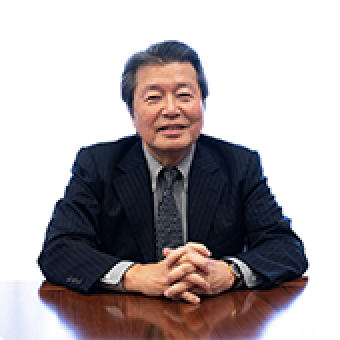
Setsuo Arikawa
President, Kyushu University
- トップページ
- 九州大学について
- 総長室
- 歴代総長
- 歴代総長メッセージ(有川節夫元総長)一覧
- 平成24年度 秋季入学式・外国人短期留学プログラム開講式(2012年10月1日)